
 By DQCS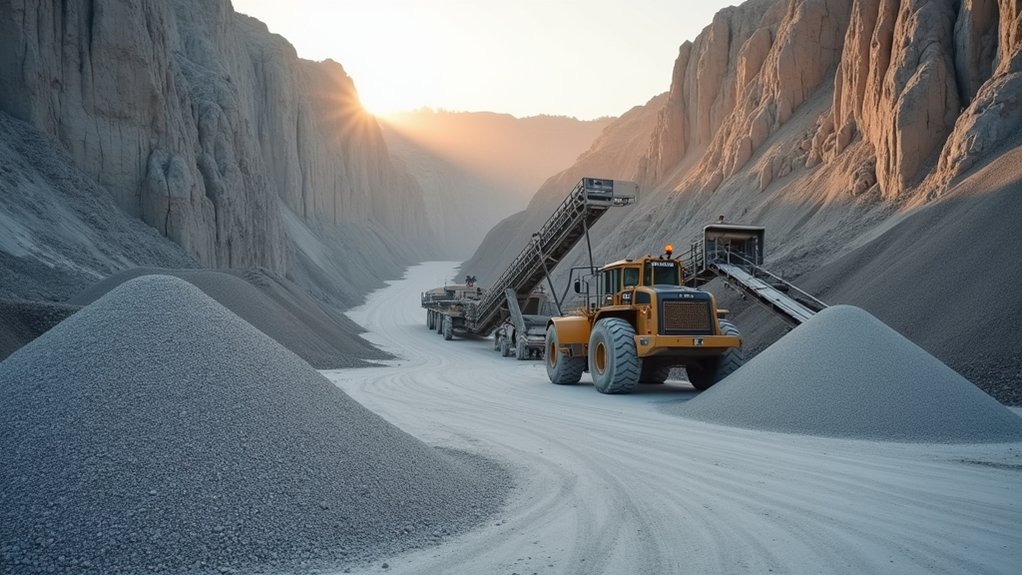
You probably don’t know that two loads labeled the same “base” can behave completely differently once you compact them. When you control blasting, crushing, screening, and stockpiles in the quarry, you get consistent particle shape and gradation, which means fewer passes, less rework, and lower risk of pumping or rutting later. Skip that discipline, and your schedule and margin take the hit—watch for the early warning signs coming up.
Quarry Process Behind Quality Aggregate
Before you ever pour concrete or lay asphalt, the quarry’s process determines whether your aggregate will hold up—or quietly drive up your costs later. You can’t value-engineer around inconsistent blasting, crushing, and screening; you’ll pay in rejected loads, schedule slips, and extra handling.
Ask how the quarry controls gradation through closed-side settings, screen maintenance, and real-time plant monitoring, then verify with lot-based testing and traceable tickets.
Push for clean stockpile management: separated piles, controlled moisture, and minimal rehandling to reduce fines and contamination that trigger rework.
Your supplier selection should also weigh uptime, haul logistics, and backup capacity, so you’re not buying downtime.
Finally, check Environmental impact practices—dust control, water management, reclamation—because compliance failures can halt production and spike delivered costs.
Aggregate Traits That Control Compaction, Drainage, Strength
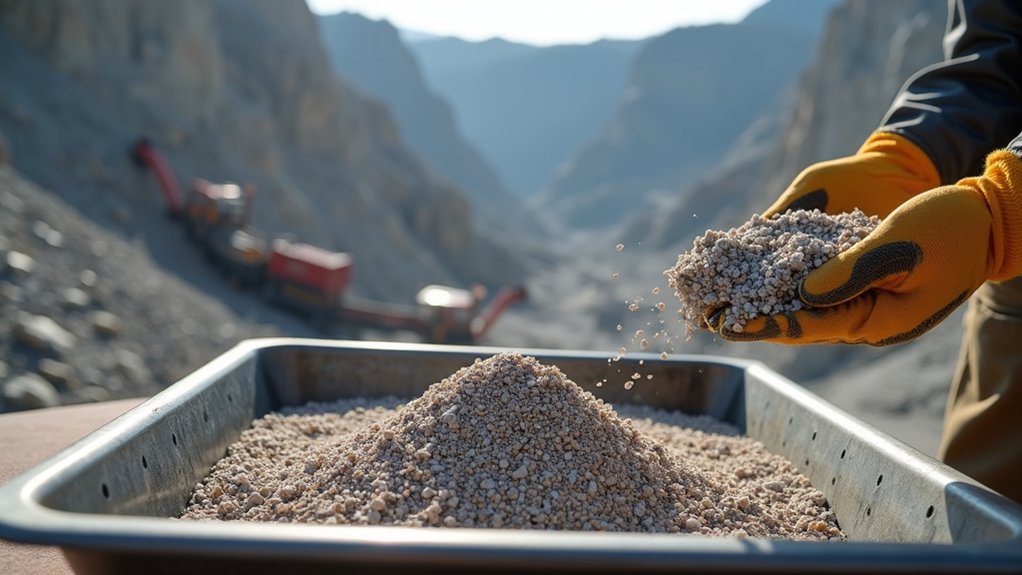
When you understand which aggregate traits drive field performance, you can specify—and pay for—only what actually improves compaction, drainage, and long-term strength. Start with particle shape and texture: angular, rough faces lock together, so you hit density faster and reduce roller passes and fuel.
Watch cleanliness; excess clay or organics act like lubricant, trapping water and weakening the base.
Control moisture content at placement. Too wet, and you pump fines, lose stiffness, and burn time waiting to dry; too dry, and you can’t seat particles without extra water and rework.
Prioritize Aggregate durability so particles don’t break down under traffic and freeze-thaw, which creates fines, clogs drainage, and forces premature maintenance.
Match hardness to loading to protect your budget.
How Aggregate Specs Test Quality (Gradation, LA Abrasion, Fines)
Although a pile of stone can look “good enough,” the spec tests tell you whether it’ll compact tightly, drain predictably, and hold up under traffic without expensive rework.
Gradation checks particle-size distribution, so you can hit target density with fewer passes, less fuel, and tighter lift thickness control.
LA Abrasion measures toughness; higher loss means faster breakdown, more maintenance, and shorter pavement life—bad ROI.
Fines testing (percent passing #200, plasticity) flags clay and dust that trap water, pump under loads, and drive change orders.
When you require verified test reports, you stabilize your Supply chain: fewer rejected loads, predictable production rates, and cleaner scheduling.
You also reduce Environmental impact by avoiding over-ordering, haul-backs, and extra compaction cycles.
Jobsite Red Flags of Poor Aggregate Quality
Even if the gradation report checks out on paper, the jobsite will warn you fast if the rock’s wrong for the lift. Watch for pumping under the roller, rutting after a single pass, or a “marbly” surface that won’t knit—signs you’ve got excess fines, weak particles, or poor angularity.
If you see segregation in the windrow, inconsistent moisture, or sudden density drops, stop and verify the pile and delivery tickets. Poor aggregate drives rework, extra lifts, and schedule slip, crushing your margins. It also raises environmental impact through more haul cycles and wasted material.
Don’t ignore supply chain issues: mixed-source loads, long stockpile times, or quarry changes often show up as color shifts and variable compaction. Inspect every load, not just the first.
Frequently Asked Questions
How Does Aggregate Quality Affect Long-Term Maintenance Costs?
You cut long-term maintenance costs when you use high-quality aggregate, because it resists cracking, settlement, and water damage. You’ll save on repairs by prioritizing Durability testing and Contaminant control, reducing rework, downtime, and warranty claims.
What Certifications Should a Reputable Quarry or Supplier Provide?
You should demand Material testing reports, ASTM/AASHTO compliance, ISO 9001 quality management, and local DOT approvals. These Certification standards verify gradation, durability, and traceability, reducing rework, delays, and lifecycle repairs so you protect ROI.
How Do Delivery Timing and Stockpile Age Impact Aggregate Performance?
Even 1% extra moisture can cut asphalt density and raise rework costs. You’ll see Delivery delays and Stockpile deterioration increase variability, contamination, and segregation, so schedule tight deliveries, rotate stock, cover piles, and retest frequently.
Can Recycled Aggregate Meet Project Requirements for Structural Foundations?
Yes, you can use recycled aggregate for structural foundations if it meets gradation, strength, and contamination limits. You’ll manage recycling challenges through testing and processing, while capturing sustainability benefits that cut disposal fees and material costs.
What Are Common Pricing Factors That Influence Aggregate Cost per Ton?
You’ll see aggregate cost per ton driven by haul distance, fuel, quarry supply, gradation, testing/certification, order volume, and permits. Demand, Market fluctuations, and Pricing transparency affect quotes; lock schedules, optimize loads, reduce idle time.