
 By DQCS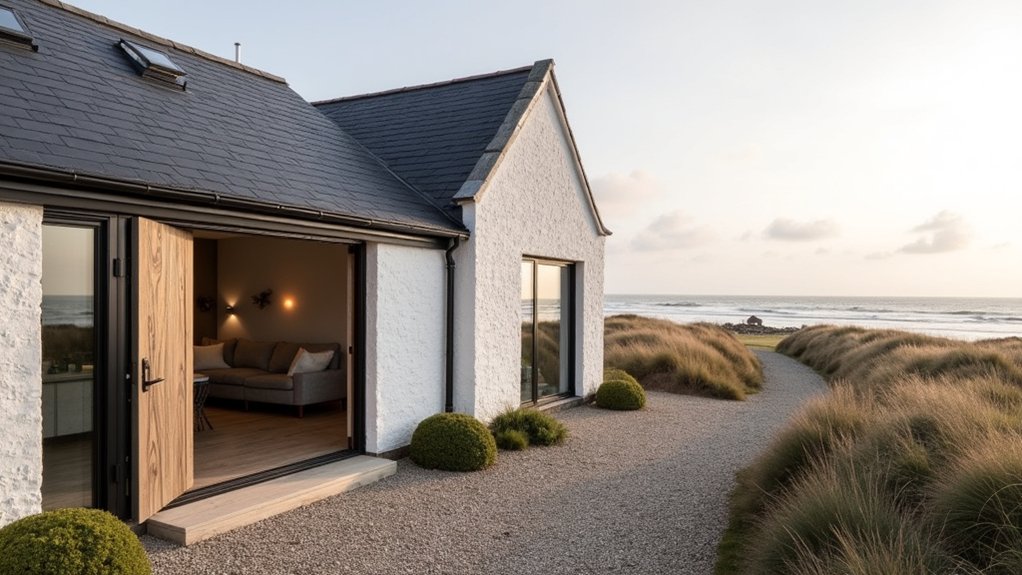
Coastal homes can lose up to 30% more heat than sheltered properties if you don’t tighten the envelope. You start this Ayr cottage rehab by pricing the essentials—damp control, insulation, and window upgrades—because they protect every finish and drive the payback. You keep ROI in mind while you repair sash surrounds, restore vintage fittings, and choose limewash and coastal tones that won’t peel. Next, you’ll see where one layout change saves money twice…
Seaside Cottage Renovation Plan: Budget, Timeline, Must-Dos
Before you pick up a hammer, lock in a renovation plan that protects your budget and maximises ROI: set a realistic all-in spend (including a 10–15% contingency for coastal corrosion and hidden damp), map a timeline from surveys to snagging, and prioritise must-dos that prevent repeat costs—roof and guttering integrity, damp proofing and ventilation, electrics to current regs, efficient heating, and salt-resistant external finishes—so every pound you put into your Ayr seaside cottage reduces risk, cuts running costs, and lifts resale and holiday-let appeal.
You’ll run surveys week 1–2, order long-lead items week 3, complete shell works by week 6, then first fix, plaster, second fix, and snagging by week 12.
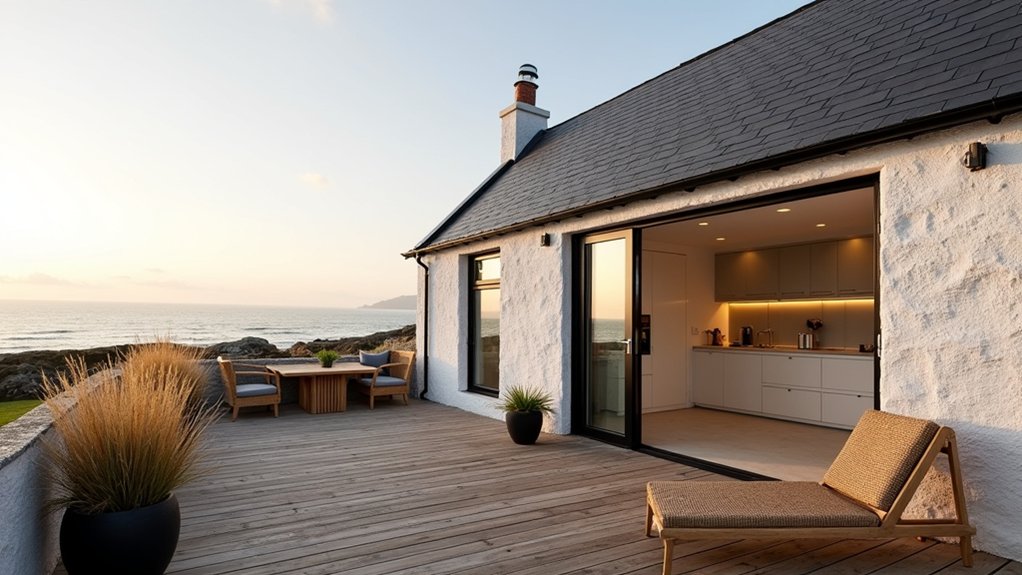
Track costs line-by-line, tender at least three quotes, and set hold points for scope creep. Finish with high-durability interior decor and low-maintenance landscaping details to boost photos and bookings.
Save the Charm: Original Features We Repaired and Kept
Once the roof, damp, electrics, and heating were locked down, we turned to the features that actually sell an Ayr seaside cottage—because keeping original fabric often costs less than replacing it and photographs better for resale and holiday lets.
You start by stripping paint off the timber sash surrounds and reseating loose glazing, then wax the boards instead of laying new flooring. You repair the original fireplace surround, fit a simple liner, and keep the hearth stone; it’s a high-impact focal point for minimal spend.
You salvage Vintage fixtures: refurbish the brass latches, polish the rim lock, and replate tired handles rather than buying sets.
Finally, you lean into coastal color with breathable limewash and a soft blue-gray on joinery to lift light without erasing patina.
Fix the Basics First: Damp Control, Insulation, Windows, Heating
Although it’s tempting to spend on paint and pretty fittings straight away, you’ll get a faster payback by tackling the four fundamentals that protect the building and cut running costs.
Start with damp: clear gutters, repair pointing, improve subfloor ventilation, and add a simple humidity-controlled extractor so timbers stay dry.
Next, insulate where it counts—loft rolls, draught-proofed floors, and pipe lagging—so every kilowatt goes further.
Upgrade windows with tight seals or slim double glazing to stop coastal wind rattle and condensation.
Finally, size heating to the now-warmer envelope: a modern boiler or heat pump with smart zoning prevents overheating and lowers bills.
You’ll preserve Interior decor choices longer, and even landscaping design benefits when indoor moisture stops migrating outside.
More Light, Better Flow, Calm Coastal Finishes That Last
When you let daylight travel further through the cottage and streamline how you move between rooms, you’ll spend less on artificial lighting and get a space that feels bigger without paying for an extension. Remove a redundant door, widen a pinch-point, and use glazed internal doors to borrow light from the brightest room.
Plan lighting design early: fewer, better fittings beat lots of cheap spots, and dimmable LEDs cut running costs.
Choose interior colors that bounce light and hide wear: warm whites, sandy greys, and muted sea-glass tones. Use scrubbable matte on walls, satin on woodwork, and moisture-resistant paint in the kitchen and bath.
Pick engineered oak or quality LVT for salt-sand traffic, and specify stainless hardware to avoid rust. These upgrades photograph well, reduce maintenance, and lift resale appeal.
Frequently Asked Questions
What Permits Were Needed for Renovating a Seaside Cottage in Ayr?
You’ll usually need Ayrshire planning permission for external changes, listed-building consent if protected, and a building warrant for structural, insulation, electrics, or plumbing work—ironic, since Seaside aesthetics sell. Prioritise Coastal durability for ROI, avoid rework.
How Did You Manage Contractors While Living Away From the Property?
You manage contractors remotely using Property management software for schedules, budgets, and approvals. You handle Remote coordination with weekly video walkthroughs, photo logs, and milestone payments, keeping ROI tight, cutting rework, and tracking costs daily.
Did Salt Air Influence Your Choice of Fixtures and Hardware?
Yes—you let salt air steer every spec. You choose marine-grade stainless or brass to protect hardware durability, avoid cheap chrome, and seal finishes. You balance Interior aesthetics with ROI by buying fewer, better fixtures.
What Ongoing Maintenance Costs Should Owners Expect After Renovation?
You’ll budget 1–3% of value yearly—like a leaky bucket you keep patching—covering inspections, paint touch-ups, and moisture control. Track landscaping expenses and cleaning routines; they protect finishes, cut repairs, and boost ROI.
How Did Renovation Choices Affect the Cottage’s Resale Value?
Your renovation boosts resale value by improving buyer appeal and cutting running costs. You’ll see strongest ROI from timeless Interior design upgrades and low-maintenance, curb-boosting Landscaping choices, plus energy efficiency, durable finishes, documented warranties.