
 By DQCS
You can lift curb appeal in an older London terrace without big spend if you start with what buyers notice first. Sweep and pressure-wash the approach, trim growth, and clear gutters so everything looks cared for. Then repaint the front door in a period-appropriate shade, swap tired hardware, and touch up railings before rust spreads. Add one warm light and two sturdy pots for instant polish—but the real value comes from what you fix next.
Tidy the Front Approach for Instant Curb Appeal

A tidy front approach delivers one of the fastest, cheapest curb-appeal wins in an older London terrace. Start with a hard reset: sweep, scrape weeds from cracks, and pressure-wash the path and front steps. Clear gutters at the porch line, then rinse down brickwork at splash height to remove traffic grime.
Trim hedges back from windows and railings so the façade reads wider and brighter. Replace broken paving slabs and re-bed loose edges; buyers notice trip hazards.
Keep planting simple: one or two pots with evergreen structure, refreshed compost, and matching saucers. If you use garden ornaments, choose one understated piece, not a cluster.
Finally, align bins and bikes out of sight to let your exterior color schemes and period details lead.
Refresh the Front Door and Period Paintwork
Where do buyers’ eyes go first after the path—your front door, then the surrounding period trim—so a quick refresh here pays back fast.
Start by washing down, scraping loose paint, and lightly sanding for a smooth base; you’ll get a sharper finish without expensive prep.
Choose a heritage-appropriate colour that contrasts crisply with the façade, and use exterior-grade primer plus two topcoats for durability in London weather.
Keep Period paintwork consistent: pick one trim colour and repeat it on architraves, fanlight frames, and any mouldings so everything reads cared-for.
Upgrade Door hardware if it’s tarnished or mismatched. A new letterbox, knocker, and handle in a single finish instantly signals quality, and it’s cheaper than replacing the door itself.
Clean and Repair Brickwork Without Losing Character
Although fresh paint draws attention, buyers read your brickwork as the real indicator of how well you’ve maintained the house, so clean and patch it carefully rather than “modernising” it.
Start with a gentle wash: low-pressure water, soft brush, and a mild detergent; skip harsh acids and sandblasting that scar faces and kill value. Treat algae with a biocide, then rinse.
Next, inspect mortar. If it’s crumbling, repoint small areas with a lime-based mix that matches colour and profile, supporting Historical preservation and preventing damp.
Replace only spalled bricks, salvaging period stock where possible. Keep repairs local and tidy; targeted Brick restoration costs less than full rework, photographs well, and signals reliable upkeep to buyers.
Update Railings, Gates, and Paths on a Budget
If your front boundary looks tired, you can lift your whole façade fast by rejuvenating railings, gates, and the path without touching expensive structural work.
Start by wire-brushing metalwork, treating rust, and repainting in a classic satin black or heritage green; it reads “maintained” to buyers. Replace missing finials or loose bolts rather than the whole run.
If your gate sags, realign hinges and add a simple latch for a clean close.
For paths, pressure-wash, re-point joints, and swap broken slabs individually. Consider resin-bound patching for small areas to mimic pricier driveway upgrades.
Define edges with inexpensive gravel boards or reclaimed bricks, then add restrained garden decor like a single house-number plaque to finish.
Keep materials consistent to maximise ROI quickly.
Improve Curb Appeal With Lighting and Planting
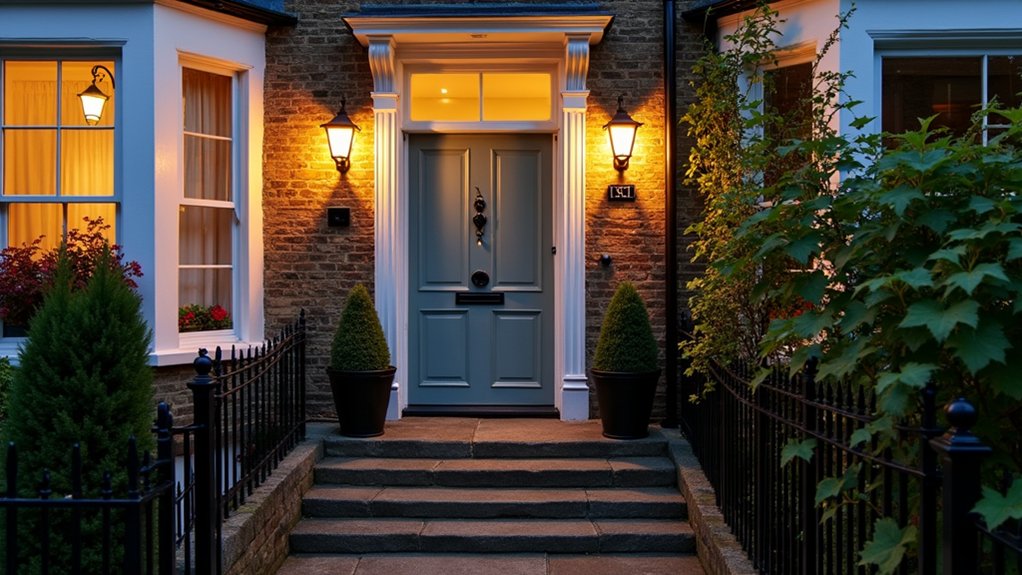
Because buyers notice atmosphere before details, you’ll boost perceived value quickly by pairing warm, well-placed lighting with simple, low-maintenance planting.
Start with garden lighting that highlights the front door and path: solar spike lights for edges, a motion-sensor lantern for security, and a warm LED porch bulb to soften brickwork. Keep colour temperature consistent (2700–3000K) so it looks intentional, not patchy.
Then add structure with two matching pots flanking the steps; choose evergreen shrubs for year-round neatness.
For quick impact, layer in flower planting with hardy options like lavender, violas, or geraniums—cheap, tidy, and appealing in photos.
Finish by mulching beds to suppress weeds and signal care without ongoing labour.
Frequently Asked Questions
What Permissions Do I Need to Change the Frontage in a Conservation Area?
Like walking a tightrope, you’ll need planning permission for most frontage changes in a Conservation area, and Permitted development is often restricted. Check Article 4 directions, confirm with the council, and choose reversible upgrades for ROI.
How Can I Boost Curb Appeal While Renting an Older Terraced Home?
Boost curb appeal as a renter by focusing on reversible upgrades: tidy garden landscaping, add pots and lighting, and try peel-off hardware. For porch enhancements, use a smart doormat, planter, and repaintable door-wrap.
Which Improvements Add the Most Value When Selling a London Terrace?
You’ll add most value by upgrading first impressions: 76% of buyers judge a home within seconds. Prioritise garden landscaping and door repainting, then improve lighting and tidy paths; they’re low-cost tweaks that boost perceived ROI.
How Do I Handle Damp, Rising Moisture, or Efflorescence on the Front Wall?
You’ll fix damp by brushing off salts, checking gutters, and improving drainage; then repair pointing and apply Moisture barriers before Exterior paint. You can’t paint over moisture—dry it first, or you’ll waste money.
What Are the Best Times of Year to Do Exterior Work in London Weather?
Aim for late spring to early autumn, when pavements dry and paint cures fast. You’ll plan seasonal maintenance around weather considerations: avoid winter freezes and windy rain, use mild days for best ROI.