
 By DQCS
On a tight city-centre strip-out, you can watch a 90% recycling rate stack up like a profit margin—one clean skip at a time. You start with a pre-demolition audit, then segregate concrete, metals, timber, and plasterboard on site so your waste notes, duty-of-care trail, and end-market specs stay compliant. That reduces haulage, avoids landfill tax, and protects programme. But the real ROI shows up when you see what still can’t be recycled—and why…
How UK Demolition Diverts ~90% of Waste
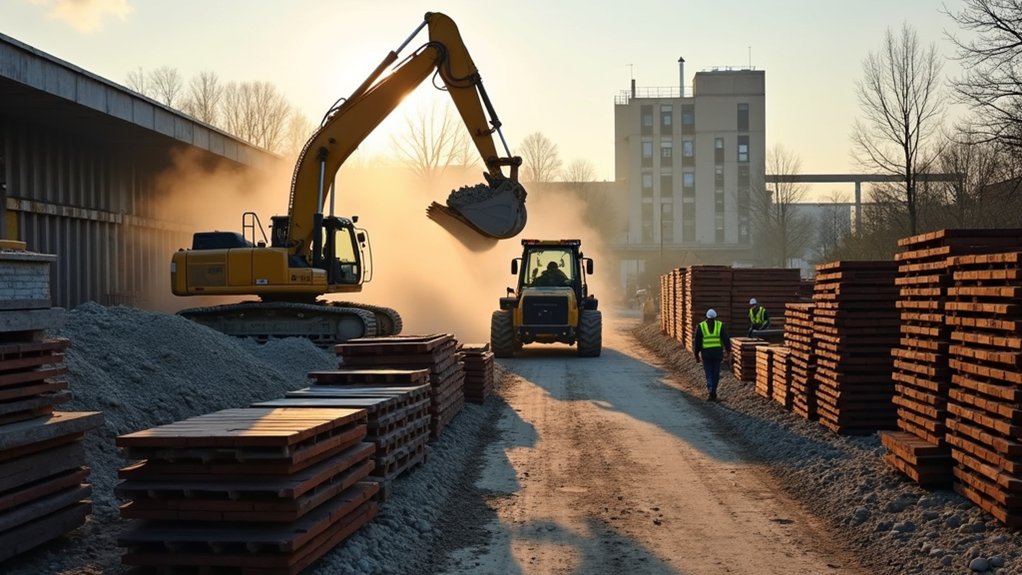
How does UK demolition routinely divert around 90% of site waste from landfill? You plan for it before the first excavator moves. You audit materials, strip out reusables, and sequence soft-strip and structural works so streams stay clean.
You segregate on site—concrete, brick, metals, timber, plasterboard—then route each to licensed recyclers with the right permits and Duty of Care paperwork. You specify crushing for aggregate and mandate take-back schemes for fixtures, cutting disposal fees and haulage costs.
You use sustainable practices like deconstruction where feasible, and you enforce waste reduction strategies through toolbox talks, clear signage, and contamination penalties. You also align with Site Waste Management expectations, keep transfer notes tidy, and track subcontractors so compliance doesn’t erode margins.
How Demolition Recycling Rates Are Measured
Before you claim a 90% diversion rate, you’ve got to measure it the way regulators and clients expect: by weight, with clear evidence for every load. Set a baseline forecast, then track actual tonnes leaving site via weighbridge tickets, Waste Transfer Notes, and invoices that show destination and treatment.
Classify each stream under the correct EWC code and record whether it’s reused, recycled, recovered, or disposed. Calculate diversion as (total waste minus landfill/incineration without energy recovery) ÷ total waste, and report monthly so you can correct poor performance fast.
Audit your chain of custody, keep photos and load logs, and align records with your waste management policies. Tight measurement proves sustainable practices, reduces disposal costs, and de-risks client reporting.
Where Concrete, Brick, Metal and Timber Go
Once you’ve measured diversion properly, the next question clients and auditors ask is where each major stream actually ends up—because that’s what drives both compliance and ROI.
Concrete and brick typically head to a licensed crusher for grading into recycled aggregates you can buy back for capping layers, haul roads, or sub-base, cutting virgin supply and transport costs.
Metals go to a scrap merchant, where magnetic and eddy-current Recycling technologies separate ferrous and non-ferrous for smelting into new stock, maximising rebate value.
Timber moves through Material sorting into reuse, then chipping for panelboard feedstock or biomass fuel under permitted outlets, helping you document end markets and duty-of-care traceability.
When you specify these routes early, you lock in stable prices and faster programme sign-off.
What Still Goes to Landfill (and Why)
Although you can divert most construction and demolition arisings, a small residue still goes to landfill because it fails reuse/recycling specs or costs more to treat than it’s worth. Typical leftovers include contaminated soils, asbestos-containing materials, insulation offcuts, mixed composites, and fines from crushing that don’t meet WRAP or end-of-waste criteria.
You’ll also landfill gypsum if it’s wet or cross-contaminated, because segregation slips trigger Recycling challenges and increase gate fees. Landfill limitations matter too: limited void space, higher landfill tax, and strict waste acceptance criteria mean you must prove you can’t reasonably recover it.
To protect ROI, you should audit streams early, price disposal by EWC code, and ring-fence hazardous loads. That keeps compliance tight and avoids costly rejections or rework later.
Frequently Asked Questions
How Much Extra Does High-Recycling Demolition Typically Cost?
You’ll typically pay 0–10% more upfront for high-recycling demolition versus standard, depending on sorting and logistics. Use a cost comparison including landfill tax and recycling incentives; compliance can cut net costs and improve ROI.
Do Clients Receive Recycling Certificates or Waste Audit Reports?
Yes—you’ll get recycling certification and a waste audit. If you divert 90%+ waste, you’ll cut landfill tax exposure, prove duty-of-care compliance, and strengthen ESG reporting. You’ll also track tonnages, destinations, and recovery rates.
How Long Does a Demolition Recycling Plan Take to Implement?
You can implement a demolition recycling plan in 1–4 weeks; complex sites take longer. You’ll map the Recycling process, secure permits, brief subcontractors, and set skips. A clear Implementation timeline cuts disposal costs and supports compliance.
Can Demolition Be Scheduled to Minimise Noise and Dust for Neighbours?
Yes—you can schedule demolition to minimise neighbours’ disturbance by timing high-impact tasks within permitted hours, using wet suppression, staggered deliveries, and acoustic screens. This noise mitigation cuts neighbourhood impact, avoids fines, and reduces complaints-driven delays.
What Insurance and Permits Are Required Before Demolition Begins?
On a 1930s semi demo, you’ll secure council demolition notice plus planning/building control approvals; you’ll file Permit applications for skips/road closures. Meet Insurance requirements: public liability, employers’ liability, contractor-all-risks, and asbestos coverage.