
 By DQCS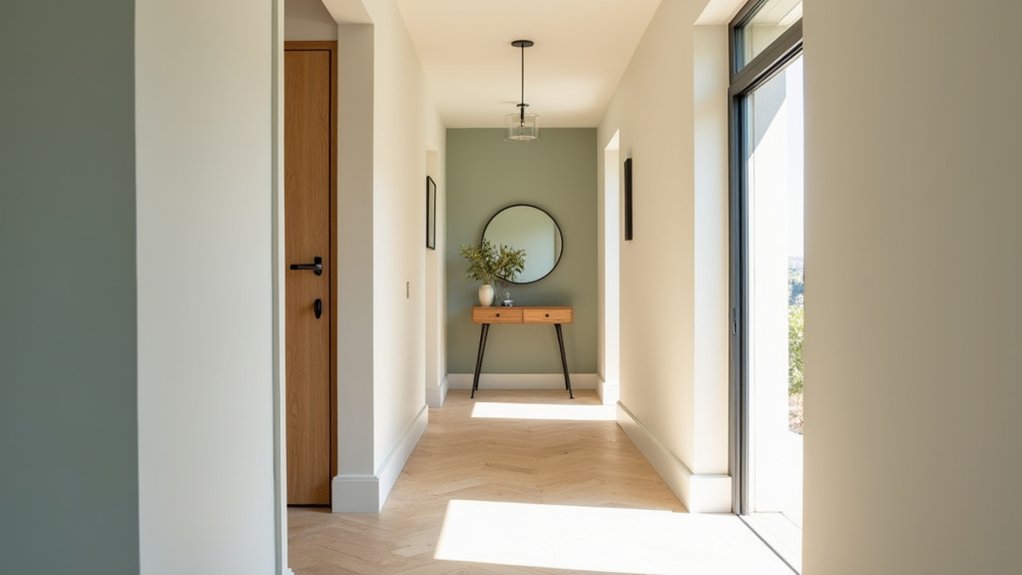
If your hallway feels tight or gloomy, you can fix it fast with a few high-ROI moves. Start by clearing the traffic line and keeping at least 36 inches of open walkway, then use slim pieces that don’t snag shoulders. Swap dated fixtures for bright, efficient lighting and add a dimmer to control glare. Finish with light, warm neutrals or cool greige to stretch the space—but the order you tackle these steps matters.
Plan Your Hallway Layout for Better Flow

If your hallway feels cramped or chaotic, a smarter layout is the fastest way to fix it. Start by mapping daily routes from entry to key rooms, then clear anything that pinches traffic flow. Keep a minimum 36-inch walking path, and shift bulky pieces to dead zones like under-stair voids or short return walls.
Make furniture placement earn its footprint: use a slim console, wall hooks, and a narrow bench only if they don’t block doors. Replace swing doors with pocket or out-swing options where possible to reclaim inches.
Add closed storage near the entry so shoes and bags don’t spread down the corridor. When you reduce obstacles, you cut scuffs, speed cleaning, and create a more “move-in ready” first impression that supports resale value.
Choose Hallway Lighting That Lifts Dark Spots
A clean layout fixes traffic flow, but lighting determines whether the hallway feels welcoming or like a tunnel. Start by mapping dark spots at night, then layer light to eliminate them without over-brightening.
Install a bright, efficient ceiling fixture for baseline illumination, ideally on a dimmer so you can match morning rush or evening wind-down. Add wall sconces at eye level to spread light across walls and reduce harsh shadows, especially near doorways and artwork.
Use accent lighting to highlight mirrors or niches; it bounces light back and makes tight corridors feel wider. Put lights on motion sensors in low-traffic zones to cut energy waste and boost safety.
Choose LEDs for long life and lower bills.
Pick Hallway Paint Colours That Open the Space
Because hallways often lack natural light and visual breaks, the right paint colour does more than “look nice”—it makes the space feel wider, brighter, and easier to move through. Start with light neutrals or soft warm whites to bounce light and reduce shadowy corners.
Use color psychology: cool greige or pale blue calms and visually recedes, while a warm cream feels welcoming without shrinking the corridor. Keep trim a shade lighter than walls to sharpen edges and add height.
For ROI, choose durable, washable formulas so touch-ups don’t force repaints. Compare paint finish options: eggshell or satin on walls resists scuffs and cleans fast; semi-gloss on trim handles bumps.
Test large swatches under your lighting before committing.
Finish With Storage and Details That Stay Clutter-Free
Once you’ve made the hallway feel brighter and larger, lock in that ROI with built-in-smarter storage and a few hard-wearing details that keep clutter off the floor.
Add a slim console with drawers, or a wall-mounted shelf with hooks so bags and keys never land on surfaces. Choose minimalist storage solutions like a closed shoe cabinet, overhead cupboards, or a bench with lift-up storage to hide bulk fast.
Protect high-traffic zones with washable paint, a runner, and a durable baseboard finish so scuffs don’t turn into repainting. Use decorative wall accents that earn their keep: a mirror that bounces light, a peg rail that replaces extra furniture, and a small tray for mail.
Keep one drop zone, label baskets, and you’ll maintain the clean look.
Frequently Asked Questions
How Much Does a Typical Hallway Renovation Cost in 2026?
In 2026, you’ll typically spend $3,000–$12,000 on a hallway renovation, depending on finishes and scope. Use cost estimation and budget planning to prioritize high-ROI upgrades—lighting, paint, flooring—so you don’t overspend.
Do I Need Planning Permission or Building Regulations Approval for Hallway Changes?
You usually don’t need planning permission for cosmetic hallway updates, but you do need building regulations approval if you alter walls, doors, electrics, or fire safety. Follow building codes, protect structural integrity, and avoid costly rework.
What Flooring Options Are Best for High-Traffic Hallways With Pets?
Choose luxury vinyl plank, porcelain tile, or sealed engineered wood; they’re Pet friendly flooring and create Durable hallway surfaces that resist scratches, spills, and odours. You’ll cut maintenance time, avoid replacements, and protect resale value.
How Long Does a Hallway Renovation Usually Take From Start to Finish?
You’ll usually finish a hallway renovation in 3–10 days, depending on demo, drying times, and permits. Choose quick-install Lighting fixtures and preselected colour schemes to cut delays, reduce labour hours, and boost resale appeal.
Should I Hire an Electrician, Painter, or General Contractor First?
Hire a general contractor first; it’s like laying tracks before the train runs. You’ll coordinate Electrical wiring early, then lock paint color choices last. This sequencing cuts rework, speeds schedules, and protects your budget’s ROI.