
 By DQCS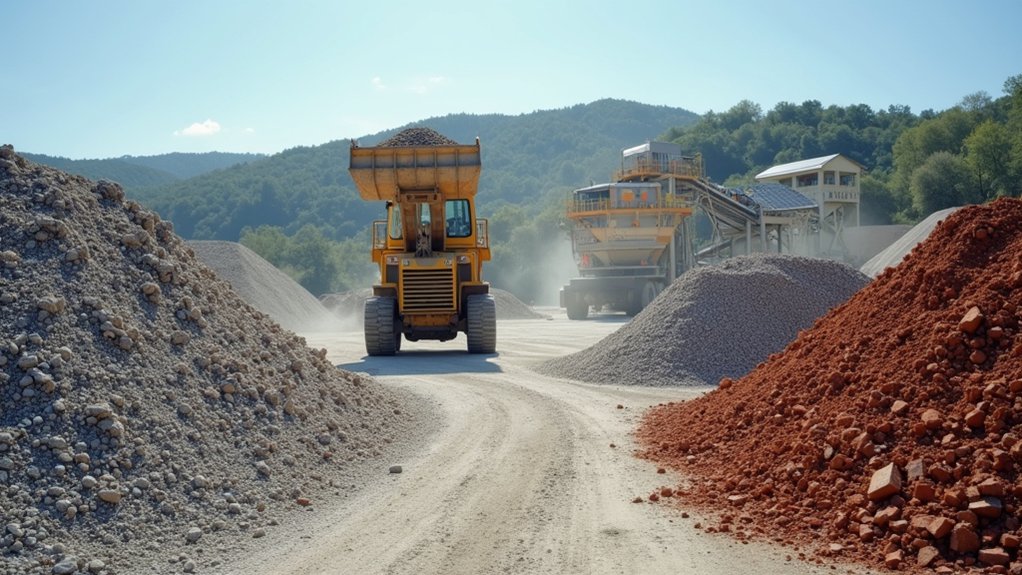
You watch a pile of broken concrete turn into clean, graded stone as the crusher hums. When you spec recycled aggregates, you can cut hauling and disposal costs, reduce virgin quarry demand, and still hit schedule on base, subbase, and fill work. But ROI only holds if you match the right material to the right application and verify quality with the right tests—because one wrong assumption can show up later as…
What Are Recycled Aggregates?
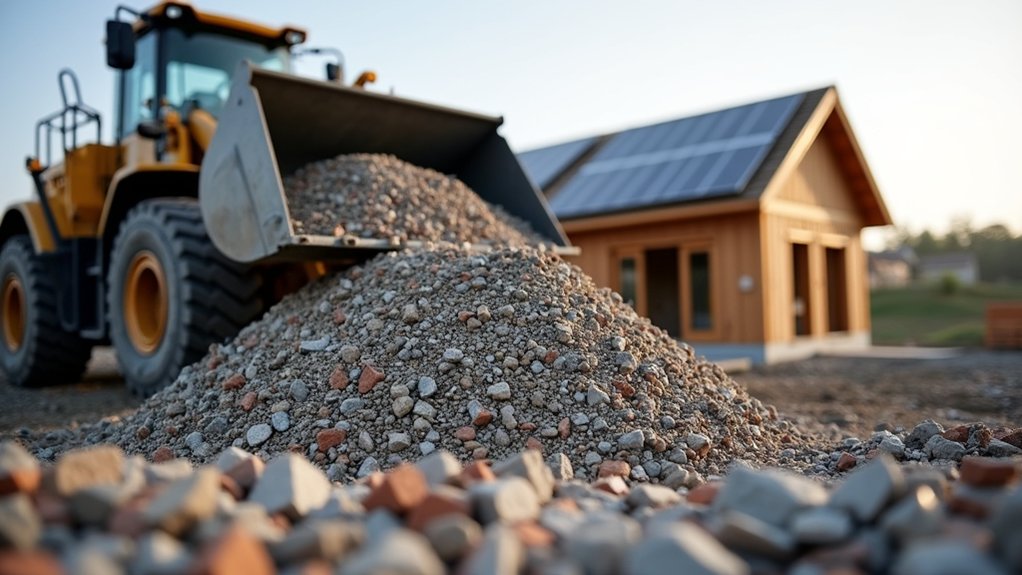
While you might think of construction debris as pure waste, recycled aggregates turn it into a cost-effective, job-ready material. You get them when you collect concrete, asphalt, brick, or similar demolition leftovers, then crush, screen, and grade them to meet project specs and local standards.
Instead of paying to haul material to landfill and buying all-new quarried stone, you keep value on-site or nearby, shortening lead times and stabilizing supply in tight markets.
The Environmental benefits show up immediately: you cut landfill volume, reduce virgin extraction, and lower transport emissions when sourcing locally.
The cost implications matter just as much: you often trim disposal fees, reduce material spend, and protect margins through predictable pricing and faster procurement.
Types of Recycled Aggregates (RCA, RAP, More)
How do you choose the right recycled aggregate when price, performance, and availability all move with the market? Start by comparing the main recycled streams and how consistently suppliers can deliver them.
Recycled concrete aggregate (RCA) comes from crushed slabs and precast. It’s widely available, but gradation and residual paste vary by source.
Reclaimed asphalt pavement (RAP) blends milled asphalt and binder-rich fines. Its value tracks oil and paving demand.
Recycled masonry aggregate adds brick and block. Expect higher absorption and more variability.
Glass cullet and slag can work as specialty blends when specs allow and local supply is steady.
Ask suppliers about innovative recycling techniques that improve cleanliness and sizing, and require an environmental impact assessment to quantify savings and de-risk procurement decisions.
Best Uses: and Where Not to Use Them
Because recycled aggregates don’t behave the same across applications, you’ll get the best ROI by matching each stream to uses where its variability won’t trigger failures, change orders, or test rejections.
Use RCA for road base, parking lots, pipe bedding, and structural fill where gradation swings are manageable and compaction drives performance.
Put RAP into asphalt base or temporary haul roads when you want fast placement and predictable workability.
Mixed recycled aggregate fits subbase, shoulder build-outs, and site access—good Environmental benefits with low risk.
Your Cost analysis should prioritize avoided virgin haul, tipping fees, and schedule gains over marginal strength targets.
Avoid recycled aggregates in exposed architectural concrete, thin lifts sensitive to raveling, and high-drainage layers where excess fines or asphalt coating can cut permeability and trigger premature distress.
Spec, Testing, and Sourcing Recycled Aggregates
If you lock in specs, testing, and sourcing upfront, you’ll turn recycled aggregates from a “maybe” value-engineering option into a bidable, low-surprise material. Specify gradation, LA abrasion, absorption, and allowable contaminants, then tie each to the exact application (base, pipe bedding, concrete).
Require source certificates and mix-design submittals so you can compare true installed cost, not just $/ton.
Build testing into your schedule: stockpile sampling, Proctor/CBR, chloride/sulfate screening, and periodic QC during placement. This protects performance and reduces rework risk that kills ROI.
Vet suppliers on throughput, contamination control, and haul distance; shorter routes cut cost and Environmental impact.
Finally, confirm Regulatory standards for recycled content claims, permits, and local acceptance to avoid inspection delays and change orders.
Frequently Asked Questions
How Do Recycled Aggregates Impact Long‑Term Property Values of Developments?
Recycled aggregates can boost long‑term property values if you prove performance and meet codes; you’ll market Sustainability benefits, manage Cost implications, and attract ESG‑minded buyers, lowering risk premiums and improving resale competitiveness.
Are There Insurance or Liability Considerations When Specifying Recycled Aggregates?
Yes—you’ll face Insurance coverage and Liability concerns; they’re a tightrope, not a tripwire. You can protect ROI by requiring certified sourcing, clear specs, testing logs, installer warranties, and insurer sign‑off before bids lock.
What Incentives or Tax Credits Exist for Using Recycled Aggregates?
You can tap federal, state, and local green-building tax credits, landfill-diversion rebates, and LEED-linked incentives when you specify recycled aggregates. They boost Cost savings and improve Supply consistency, strengthening your ROI, bids, and compliance.
How Do Recycled Aggregates Affect Worker Safety and Site Dust Exposure?
You’ll slash dust exposure like a hurricane—when you spec washed, well-graded recycled aggregates and control crushing. You improve worker safety with PPE, wet suppression, and monitoring, avoiding silica spikes, downtime, claims, and compliance costs.
Can Recycled Aggregates Help Achieve LEED or Other Green Building Credits?
Yes, you can earn LEED and other green credits by specifying recycled aggregates. You’ll boost material durability and supply consistency, document recycled content and regional sourcing, cut disposal fees, and improve bid competitiveness and client perception.