
 By DQCS
Your garden room is a shed in winter clothing, and the fit decides its value. You can turn it into year-round space without wasting money if you prioritise insulation, airtight doors and glazing, and electrics that support daily use. Every upgrade should cut heat loss, prevent damp, and lower running costs so the room pays you back in comfort and resale appeal. Start in the wrong place, though, and you’ll spend twice to fix…
Plan Your Garden Room for All Seasons
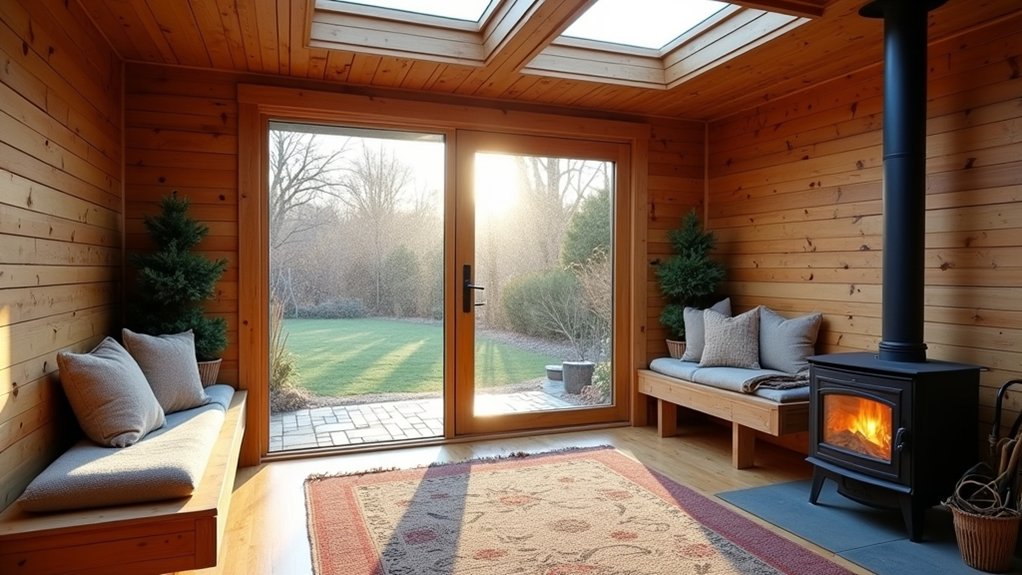
If you want your garden room to pay off year-round, start by planning for the harshest week of winter and the hottest day of summer, then work backward.
Map how you’ll use it: home office weekdays, gym mornings, guests on weekends. That schedule drives layout, power, lighting, and ventilation needs so you don’t overbuild.
Orient desks and seating to daylight, glare, and privacy; choose window sizes and shading that reduce cooling costs and protect finishes.
Budget for durable flooring and moisture-resistant surfaces that won’t need replacing after one damp season.
Keep garden room aesthetics simple and timeless to protect resale value.
Make outdoor furniture choices that stack, store easily, and handle sun and rain, so you extend usable space without expensive add-ons.
Insulate Your Garden Room Walls, Floor, and Roof
Although insulation feels like a hidden upgrade, it’s one of the highest-ROI moves you can make in a garden room because it cuts heating and cooling costs every single day you use the space.
Start with wall insulation: fill stud cavities with mineral wool or rigid PIR boards, then tape seams to reduce heat loss.
Underfoot, add floor insulation between joists, plus a vapour control layer so moisture doesn’t wreck performance.
Overhead, prioritize roof insulation because heat escapes upward fast; use rigid boards between and under rafters to hit a solid U-value without losing headroom.
Don’t forget thermal bridges at corners and around beams—continuous layers pay back.
Insulate once, then you’ll run smaller heaters and cheaper fans year-round.
Stop Draughts With Better Doors and Glazing
Insulation only pays off when you keep the warmed (or cooled) air inside, so tackle draughts next by upgrading your doors and glazing. Start by checking gaps on a windy day; even small leaks can double your heat loss at the edges.
Replace tired Window seals and add compressible weatherstrips to frames. If your panes are single glazed, price up modern double glazing or secondary glazing; both cut condensation and reduce heating hours, giving a fast payback in winter comfort and lower bills.
For doors, fit proper Door thresholds and a tight sweep to stop cold air pooling at floor level. Choose insulated exterior-grade doors over hollow types, and ensure hinges pull the slab firmly into the seals.
You’ll get more usable months without overspending on heating.
Upgrade Electrics, Lighting, and Internet for Daily Use
Once you’ve sealed the room up, upgrade the electrics and connectivity so you can use the space daily without relying on extension leads or patchy Wi‑Fi. Get a qualified electrician to add a small consumer unit, extra sockets, and an outdoor-rated spur from the house; it’s a one-off cost that reduces trip hazards and adds sale appeal.
Run Ethernet in conduit if you can, then back it up with Wi Fi boosters placed mid‑route, not buried behind furniture.
Plan task, ambient, and exterior lights on separate circuits so you don’t overlight the whole room. Use Smart lighting with timers and occupancy sensors to cut wasted hours and make the room feel “finished” for minimal spend.
Add USB-C outlets for laptops and phones.
Add Heating and Ventilation That Actually Works

Where does a garden room usually fall down in winter and summer? It’s comfort: freezing mornings, then stifling afternoons. Fix that with right-sized heating and airflow, not bigger gadgets.
Start with insulation and airtightness so you don’t pay to heat the garden. Then pick HVAC solutions that match how you use the space. For occasional use, an oil-filled radiator plus a smart plug keeps upfront costs low.
For daily use, a small split air-source heat pump gives the best running-cost ROI and adds summer cooling.
Add simple Ventilation systems: a through-wall extractor with humidistat, trickle vents, or an MVHR unit if you’ve sealed it tightly. You’ll cut condensation, protect finishes, and keep the room rentable, sellable, and usable year-round.
Frequently Asked Questions
What Planning Permission Rules Apply When Converting a Garden Room for Year-Round Use?
Like threading a needle, you’ll need planning permission if you change use, exceed permitted development limits, or add services; you’ll still meet building regulations for insulation, electrics, fire safety—avoiding costly rework, protecting ROI.
How Much Does a Full Year-Round Garden Room Renovation Typically Cost?
You’ll typically pay £10,000–£40,000+ for a full year-round garden room renovation, depending on insulation, electrics, and glazing. You’ll boost ROI by prioritizing durable garden room decor, reusing outdoor furniture, and minimizing structural changes.
What Insurance Changes Are Needed After Upgrading a Garden Room for Daily Use?
You’ll likely need insurance coverage upgrades and policy adjustments—tell your insurer it’s daily-use space, update rebuild value, contents, liability, and business-use if applicable. It’s tempting to assume you’re covered; check now to protect ROI.
How Can I Prevent Condensation and Mould Long-Term in a Renovated Garden Room?
You’ll prevent condensation and mould long-term by combining ventilation strategies (trickle vents, extractor, purge airing) with moisture control: insulate, add vapour barrier, seal gaps, use dehumidifier. You’ll protect finishes, cut heating waste, boost ROI.
Will a Year-Round Garden Room Renovation Increase My Property’s Resale Value?
Yes—you’ll likely boost resale: a cosy office beats a cold shed. You’ll spend upfront, but you can recoup more if you add strong landscaping design, solar energy, permits, and insulation buyers trust.