
 By DQCS
When you design a new home for efficiency, you’re really controlling long-term costs and resale appeal. You start by tightening the envelope with better insulation and air sealing, then you place high-performance windows where they pay back—capturing winter sun and blocking summer heat. You right-size a heat pump and add smart ventilation so you’re not conditioning wasted air. Then you pre-wire for solar and controls. The biggest savings often come from one decision you’re about to make…
Energy-Efficient New Home Design Basics

Where do you get the biggest energy savings for the least money in a new build? Start with smart orientation and glazing choices: you’ll cut heating and cooling loads before you buy fancy equipment.
Place more glass where you want winter sun, shade it for summer, and keep west-facing windows modest to avoid afternoon heat spikes.
Choose right-sized, high-efficiency HVAC and a heat-pump water heater, then add simple controls like programmable thermostats and efficient ventilation.
Specify eco-friendly building materials that reduce waste and callbacks—durable siding, low-VOC finishes, and products with solid warranties.
Don’t overlook sustainable landscaping: shade trees, drought-tolerant planting, and drip irrigation lower outdoor water bills and improve resale appeal without major upfront cost.
Build a Tight Envelope: Insulation and Air Sealing
Because your HVAC can only perform as well as the shell around it, the cheapest long-term energy win in a new build is a tight envelope—continuous insulation plus meticulous air sealing.
Start by choosing insulation materials that match your assemblies and budget: dense-pack cellulose for cavities, spray foam for tricky transitions, rigid foam or mineral wool for continuous exterior layers.
Then treat air leakage like a line-item cost you can’t afford. Seal the sill plate, rim joists, top plates, and all penetrations with gaskets, tapes, and durable sealants.
Specify a continuous air barrier and make trades respect it, because one sloppy cut can negate expensive R-values.
Verify with a blower-door test before drywall, fix leaks while they’re accessible, and you’ll lock in lower bills and better comfort.
Choose Windows and Orientation That Cut Heat Loss
How do you buy comfort without overspending on glass? Start by treating windows as a targeted upgrade, not a luxury finish. Put your biggest budget on the few openings that matter most: large views, doors, and west-facing exposures. Compare U-factor and air-leakage ratings first, then shop frames.
Vinyl and fiberglass often beat wood on price-to-performance, while composite options can split the difference—choose window materials that match your climate and maintenance tolerance.
Next, use orientation strategies to cut losses before you pay for extra panes. Favor south-facing glass for winter sun, limit north glazing, and keep east/west windows smaller to dodge morning and afternoon heat swings.
Add overhangs or exterior shades where the sun hits hardest.
Right-Size HVAC With Heat Pumps and Ventilation
Once you’ve trimmed heat loss with smart window choices and orientation, you can stop paying for oversized mechanicals and right-size your HVAC.
Start with a proper load calculation, then pick a cold-climate heat pump that matches it; you’ll cut upfront cost, avoid short-cycling, and lower monthly bills.
Use simple zoning strategies—like separate thermostats for sleeping and living areas or ductless heads for additions—so you’re not conditioning empty rooms.
Pair the heat pump with balanced ventilation (ERV or HRV) sized to your floor plan, not guesswork.
You’ll protect indoor air quality, manage humidity, and reduce odor and VOC buildup without wasting energy.
Spend on commissioning: airflow, refrigerant charge, and duct leakage testing pay back fast.
Plan Solar-Ready Wiring and Smart Home Controls
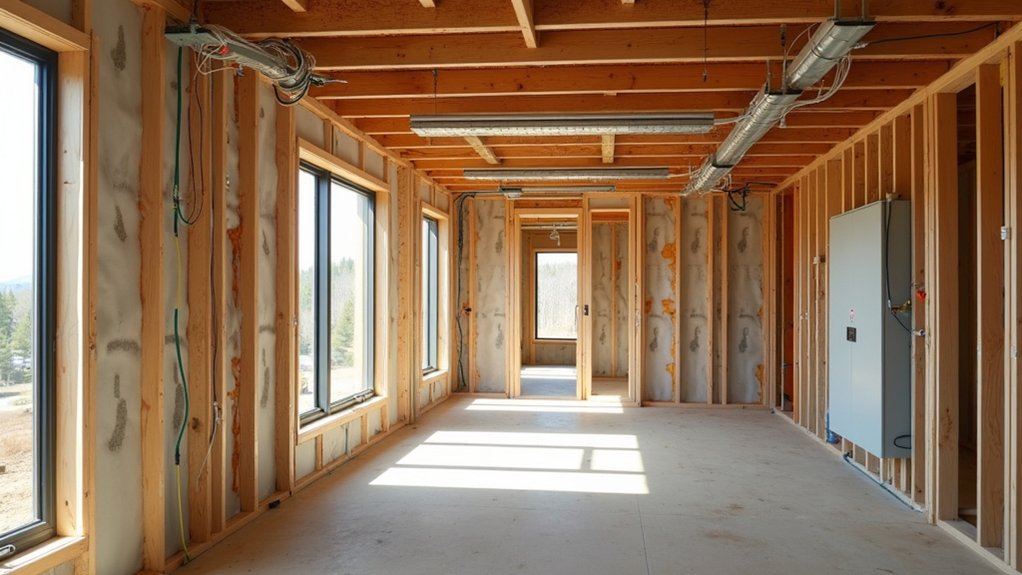
Before drywall goes up, run the conduit and circuits that make solar and smart controls a low-cost add later instead of a pricey retrofit. Stub conduit from attic to panel, reserve breaker space, and label routes so your electrician works fast. Add a roof junction box and pull an extra string for future PV wiring. This simple solar infrastructure protects resale value as buyers expect clean upgrades.
For home automation, centralize low-voltage runs to a structured media panel, and prewire for thermostats, occupancy sensors, and motorized shades. Choose a smart electrical panel or at least install CT clamps and a gateway path so energy monitoring’s plug-and-play.
Put Ethernet drops at AP locations and doorbell/camera points to avoid Wi‑Fi bandaids. You’ll cut labor hours and keep options open.
Frequently Asked Questions
What Rebates or Tax Credits Apply to Energy-Efficient New Home Construction?
You can claim federal Energy Efficient Home and Inflation Reduction Act credits, plus state/utility rebates for HVAC, insulation, and Renewable sources. Check local Building codes, income caps, and builder certification, then stack incentives to cut upfront costs.
How Long Is the Payback Period for Energy-Efficient Upgrades?
Your payback period typically runs 3–10 years—lightning-fast if you prioritize insulation, heat pumps, and LEDs. You’ll lock in cost savings sooner by syncing upgrades to your upgrade timeline and local utility rates.
Will Energy-Efficient Designs Increase Resale Value and Buyer Demand?
Yes—energy-efficient designs typically boost resale value and buyer demand because you’ll advertise lower bills. You’ll stand out with Smart appliances and Renewable energy, justify a higher price, sell faster, and face fewer buyer objections.
What Maintenance Do High-Performance Homes Require Compared to Standard Homes?
You’ll follow similar Maintenance routines, but you’ll add regular filter changes, HRV/ERV cleanings, and seal inspections. You’ll watch durability considerations like moisture control and firmware updates, avoiding costly repairs and protecting resale value.
How Do Energy-Efficient Features Affect Homeowners Insurance Costs and Coverage?
Energy-efficient features can lower your premiums through Insurance discounts, but you may need coverage adjustments for pricier materials, solar, or smart systems. You’ll document upgrades, confirm replacement values, and compare carriers to avoid gaps.