
 By DQCS
Like the builders who chose stone to outlast generations, you’re balancing upfront price against long-term risk. You match the stone to the job site, then verify strength, freeze-thaw performance, and the finish that won’t drive maintenance costs. You also confirm quarry supply and color consistency so you don’t pay for delays or ugly patchwork. Get these basics wrong, and your ROI shrinks fast—so start with the one factor most teams skip…
Match the Stone to the Job Site

Where will the stone actually live—full sun, freeze-thaw winters, heavy foot traffic, or constant moisture? Map the exposure first, because misalignment drives premature spalling, staining, and replacement costs.
Specify slip resistance for wet entries, abrasion tolerance for plazas, and tight dimensional control for thin veneers so you don’t pay for rework.
Check drainage, base prep, and joint design; the cheapest stone fails fast if water can’t exit.
Match color and texture to Architectural aesthetics you can maintain—light stones may show rust, dark stones can fade in UV.
Finally, minimize Environmental impact and freight spend by planning quantities, cuts, and delivery access early; fewer breakages and returns protect ROI.
Pick a Quarry Stone Type That Fits
You’ll get the best ROI when you pick a quarry stone type that matches how you’ll use it—base, drainage, surfacing, or decorative work.
Compare strength and durability ratings against your load and weather exposure so you don’t pay twice for repairs or premature replacement.
Then choose color and texture that meet the look you want without driving up cost through special sourcing or extra processing.
Match Stone To Use
How do you pick a quarry stone that won’t inflate your install and long-term maintenance costs? Start by matching stone to the job’s function and finish requirements.
For high-traffic floors, choose a stone that takes a consistent, slip-aware finish so you don’t pay for rework or callbacks. For exterior cladding, prioritize panel sizes and thicknesses that minimize cutting, anchors, and labor hours.
For landscaping, use larger, quarry-direct pieces where you can to reduce fabrication and freight. If your project carries historical significance or cultural symbolism, source a visually compatible stone early so you avoid pricey mockups, change orders, and schedule delays.
Always confirm lead times, minimum order quantities, and local availability to protect ROI and keep budgets predictable.
Compare Strength And Durability
Matching stone to the job sets your baseline costs, but strength and durability determine whether you’ll pay again later through cracking, spalling, excessive wear, or premature replacement. Start by comparing compressive strength, abrasion resistance, and freeze-thaw performance against your site conditions and traffic loads.
Granite and basalt typically deliver high wear resistance for paving, while some limestones suit lower-impact walls and cladding when properly detailed. Ask your supplier for test data tied to the specific quarry bench, since quarry extraction variations can change performance.
Factor in maintenance: softer stones may need more frequent sealing and stone polishing to keep edges and surfaces serviceable. Finally, price bids using lifecycle costs—material plus install, repairs, downtime, and replacement risk—to identify the real ROI.
Consider Color And Texture
Although strength sets the performance floor, color and texture drive curb appeal and long-term upkeep costs, so pick a quarry stone type that fits both the design intent and the maintenance budget. Start by viewing full-range samples, not just a brochure chip, because natural variation can shift your facade from “premium” to “patchy” if you don’t plan coursing and blending.
Choose lighter, fine-grained stones where staining and efflorescence would be costly to clean; use darker or cleft textures where dirt and wear won’t telegraph. Match finish to traffic: honed shows scratches, flame or bush-hammer hides them and boosts slip resistance, reducing liability.
Confirm sealant needs and recoat cycles up front; lower ongoing maintenance usually delivers better ROI while preserving aesthetic appeal.
Check Stone Strength and Load Ratings
Before you buy, check the stone’s strength and load ratings because that spec sheet can save you from expensive cracking, callbacks, or full replacements.
Match compressive strength to wall loads, traffic, and point loads from columns or equipment.
Verify modulus of rupture for lintels, stair treads, and thin veneer panels; a low number means more breakage and higher waste.
Ask for tested density and absorption to estimate handling costs and anchoring needs, then compare that to installed price per square foot for true ROI.
If you’re in an active zone, prioritize seismic resistance and confirm the quarry’s test method aligns with your engineer’s assumptions.
For labs, pools, or industrial sites, demand chemical resilience data so acids and salts don’t trigger surface loss.
Choose Stone for Weather and Freeze-Thaw
If you ignore freeze-thaw performance, you’ll pay twice—once for the stone and again for repairs when water gets in, expands, and cracks it.
You can protect your ROI by choosing low-absorption, tight-grained stone and specifying the right finish and sealer for your exposure conditions.
Match the stone to your local climate cycles and moisture levels so it lasts longer with less maintenance.
Freeze-Thaw Durability Factors
When winter cycles swing your stone from soaked to frozen and back again, weak material cracks, spalls, and forces you into early repairs that erase any upfront savings. To protect ROI, you need dense, low-porosity stone with minimal moisture absorption so less water is available to expand inside pores.
Ask your quarry for absorption and freeze-thaw test results, then compare them against your service expectations and warranty risk. Also consider thermal expansion: large swings can stress joints and fasteners, multiplying maintenance costs even if the stone itself survives.
Specify consistent block selection, tight grading, and proper surface finishes that reduce water entry. Budget for mockups and field sealing only when data proves it pays back in fewer callbacks and longer replacement cycles.
Climate-Specific Stone Selection
Although one “good-looking” stone can perform very differently across regions, you’ll protect ROI by matching the material to your site’s weather profile—freeze‑thaw frequency, precipitation type, humidity, deicing salts, coastal spray, and heat swings—so you don’t pay twice in replacements, repointing, and downtime.
In cold zones, prioritize low absorption, tight pore structure, and proven ASTM freeze‑thaw ratings; specify thicker units and compatible mortar to reduce scaling and spalls.
In wet/humid climates, choose stone that sheds water, resists biological growth, and accepts breathable sealers.
Near coasts or salted roads, pick dense, low‑porosity stone and detail drip edges to limit chloride loading.
In hot, high‑swing regions, verify thermal expansion and anchorage.
Balance Environmental impact with local quarry logistics and cultural significance to sustain approvals and long-term value.
Select the Right Stone Finish and Texture
How do you pick a stone finish that looks right and pays off over time? Start by pricing maintenance, not just material.
A polished finish boosts visual impact and can raise perceived value in lobbies, retail, and high-end interiors, but it shows scratches and needs regular cleaning, so budget labor and downtime.
For exterior walks or busy entries, a rough texture improves slip resistance and hides wear, cutting replacement and liability costs.
Match the finish to traffic: higher abrasion calls for honed, flamed, or bush-hammered surfaces that keep their look longer.
Ask your quarry supplier for sample panels and test them with water, dirt, and your cleaning chemicals.
Choose the finish that meets performance with the lowest life-cycle cost.
Plan Stone Thickness and Installation Method
Because stone thickness and installation method drive both your upfront budget and your long-term risk, lock them in early with your engineer and installer. Thicker units cost more to buy, ship, and set, but they can reduce breakage, callbacks, and replacement cycles—often improving ROI on high-traffic or freeze-thaw sites.
For veneers, specify thickness that matches your anchors, backup wall tolerances, and expected wind loads so you don’t pay for overbuild.
For pavers and slabs, choose thickness by live load and base quality, then align stone placement with joint layout to minimize cuts and waste.
Compare bedding techniques: mortar bed for rigidity and precise grades; sand-set for speed and easier repairs.
Detail drainage, movement joints, and edge restraint up front.
Confirm Quarry Supply and Color Consistency
Once you’ve locked in thickness and installation details, verify the quarry can supply the volumes and blend you’ve specified—on your schedule and at a stable unit cost. Ask for recent production data, current inventory, and lead times by product size so you don’t pay premiums for rush freight or last-minute substitutions.
Lock in a lot plan and sequencing notes that align with your takeoff.
To protect color consistency, request physical samples from multiple pallets or benches, not a single “perfect” piece. Confirm whether the quarry will blend runs, track bed/face orientation, and provide a written range of variation.
Require photo documentation at loadout and tag bundles by zone so crews place material correctly. These steps prevent expensive reorders, rework, and schedule drag.
Compare Stone Cost, Upkeep, and Lifespan
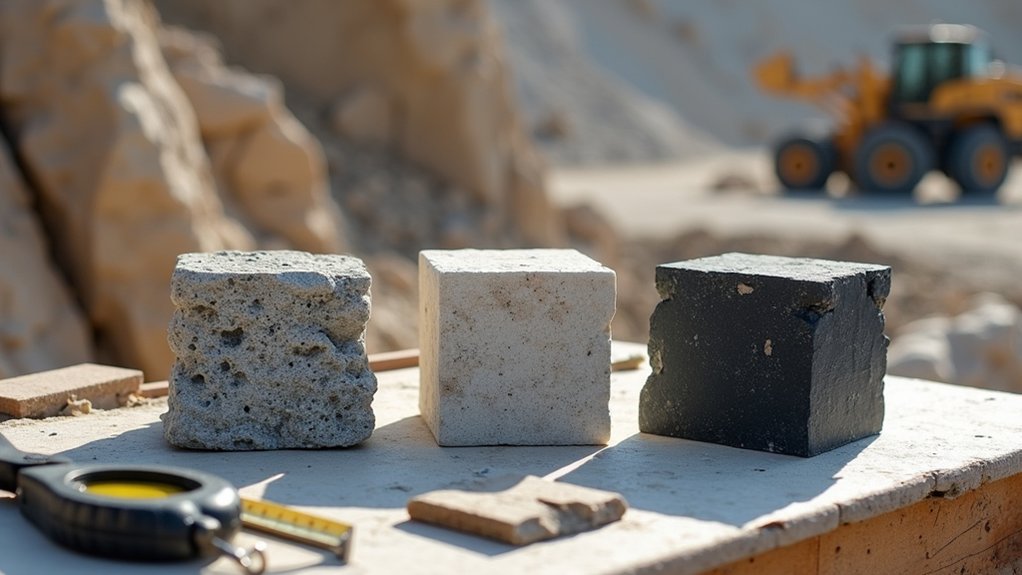
While the per-square-foot price gets most of the attention, you’ll make a better decision by comparing each stone’s total cost of ownership—material, fabrication, install labor, sealing/cleaning cycles, expected repairs, and service life in your specific exposure.
Build a simple Cost comparison table: initial installed $/SF, annual upkeep $/SF, and replacement year.
Hard, dense stones may cost more upfront but cut staining, spalling, and joint failure, lowering lifecycle spend.
Softer or more porous options can look cheaper yet demand frequent sealing, gentler cleaners, and more patching—key Maintenance considerations that inflate operating budgets.
Match finish to traffic; polished shows wear, thermal finishes hide abrasion.
Ask your supplier for warranty terms, recommended cleaners, and real-world performance data in your climate.
Frequently Asked Questions
Do Quarry-Sourced Stones Qualify for LEED or Other Sustainability Credits?
Yes, quarry-sourced stones can qualify for LEED and other credits. Like a rotary phone, you’ll win points by documenting Environmental impact and doing Cost comparison: local sourcing, EPDs, responsible extraction, durability, and reduced transport.
What Documentation Proves the Stone’s Origin and Ethical Extraction Practices?
You’ll prove origin and ethical extraction with chain-of-custody invoices, quarry location affidavits, and third-party audit reports. Request Certification documentation and Ethical sourcing proof like ISO 14001/45001, labor compliance records, and extraction permits to protect ROI.
How Long Are Typical Lead Times From Quarry to Delivery on Site?
You’ll typically get delivery in 2–8 weeks: source, cut, ship. You’ll cut costs by confirming stone durability specs, checking quarry safety audits, locking schedules early, and buffering 1–2 weeks for logistics.
Can the Quarry Provide Mockups or Sample Panels Before Full Production?
Yes—you can usually get Sample panel availability and Custom mockup options before full production. You’ll pay a small upfront fee, but you’ll cut rework, avoid change orders, confirm finishes early, and protect ROI.
What Warranties or Guarantees Are Offered on Quarry-Supplied Stone Products?
Like an insurance policy for your façade, you’ll get warranties covering material defects, stone durability, and workmanship, tied to extraction methods and QC. You should demand written terms, exclusions, replacement credits, and labor limits to protect ROI.