
 By DQCS
You don’t make money from a vacant, constrained site—you make it when you clear it fast and safely. If you time demolition to planning and procurement, you shorten the programme, reduce holding costs, and bring funders in earlier. You also create immediate local jobs and spend with regional plant, haulage, and compliance suppliers, while recycling and salvage can offset disposal and keep value nearby. The question is: where does the ROI really show up first…
Demolition’s Economic Value Chain (UK Overview)

Where does demolition actually make (or save) money in the UK? You capture value before the first machine arrives by running tight surveys, isolating asbestos, and pricing salvage.
You then protect upside by choosing selective strip-out, so high-grade brick, steel, and MEP kit re-enter the market instead of landfill. You cut disposal costs by sorting on site and targeting local recycling rates, while waste-haulage competition keeps margins honest.
You also de-risk transactions: clear scopes, transparent reporting, and compliant environmental remediation reduce lender friction and insurance loadings.
If you’re working near listed assets, you preserve returns through historic preservation—stabilise façades, document features, and avoid enforcement delays and redesign costs.
Finally, you facilitate downstream GDP by handing over a build-ready plot to trades, suppliers, and local services.
How Demolition Fits Into Planning Timelines
Because programme risk is money risk, you should treat demolition as a planning-critical workstream, not a last-minute enabling package. Build it into your master programme alongside design freeze, utilities diversions, surveys, and procurement, so you lock in timing coordination with groundworks and avoid costly stand-downs.
Start early with intrusive asbestos surveys, structural sequencing, and logistics plans; they’ll shape method, duration, and tender pricing.
You’ll protect ROI by aligning demolition milestones with funding drawdowns, pre-let conditions, and contractor mobilisation windows, reducing prelims and extension-of-time exposure.
Don’t underestimate regulatory compliance: permits, Section 80 notices, party wall processes, waste duty of care, and traffic management approvals can dictate critical path. If you front-load approvals and data, you’ll buy certainty, compress handover, and keep your project bankable.
How Demolition Kick-Starts Local Regeneration
When you clear obsolete structures, you convert brownfields into bankable sites with cleaner title paths, lower remediation uncertainty, and faster permitting.
That certainty improves your pro forma, pulls in lenders and equity, and helps you pre-lease or pre-sell sooner.
As capital arrives, you trigger construction spend and long-term hiring, turning demolition into the first ROI move in local regeneration.
Unlocking Brownfield Development
How do you turn a fenced-off, value-draining brownfield into a bankable development site? You start with targeted demolition that removes liabilities, not just buildings. Strip out unsafe structures, cap or excavate hotspots of land contamination, and document it all. That evidence de-risks planning, speeds approvals, and tightens your cost model.
Next, sequence environmental remediation alongside enabling works: isolate services, crush and reuse clean concrete, segregate hazardous waste, and stabilise ground conditions for foundations. You’ll cut haulage costs, shorten programme time, and reduce unknowns that inflate contingencies.
A cleared, certified plot prices better because buyers can underwrite it with fewer caveats. When you control risks early, you convert dead land into a deliverable asset with measurable uplift.
Attracting Investment And Jobs
Although cranes and new builds grab headlines, demolition often delivers the first real ROI signal to investors and employers by turning a “maybe someday” site into a financeable, programmable project. When you clear risk—unstable structures, unknown services, contamination pathways—you shorten diligence, lower contingencies, and *release* faster capital decisions.
You also create visible momentum: hoardings go up, timelines harden, and tenants can pre-let with confidence.
If you pair works with Community engagement, you reduce objections, speed approvals, and protect programme certainty—key for lenders and operators.
Manage Environmental impact through reuse targets, dust/noise controls, and low-carbon plant, and you’ll widen your bidder pool and improve ESG scoring. That translates into higher valuations, earlier job creation, and a stronger case for local supply-chain spend.
How Demolition Creates Jobs on Site
When you start a demolition project, you’re not just clearing a site—you’re staffing it with skilled operators, cutters, riggers, and supervisors who keep production moving and costs controlled.
You’ll also add on-site safety and support roles like HSE leads, traffic marshals, equipment techs, and laborers, reducing incidents and downtime that crush ROI.
If you scope these roles correctly, you’ll hit schedule targets, protect margins, and make the next phase build-ready faster.
Skilled Demolition Crew Roles
Because demolition is a production job, your ROI depends on the crew roles you put on site and how well they coordinate. You’ll typically need a working supervisor to sequence tasks, track outputs, and keep downtime low.
Plant operators turn specialized equipment into tonnes-per-hour, so match machine size to the footprint and access.
Burn-cutters and soft-strip teams clear steel and internals fast, protecting resale value in salvageable items.
Skilled labourers handle segregation and loading so wagons don’t sit idle.
A dedicated banksman and logistics lead optimise vehicle turns and reduce wait charges.
Invest in crew training to widen competencies, cover absence, and shorten changeovers.
When each role owns a measurable rate, you forecast costs tightly and deliver on programme.
On-Site Safety And Support
How do you protect margins on a live demolition site? You invest in Site safety and crew support that keeps work moving, not stopping. Put a dedicated safety supervisor on the deck, run tight inductions, and track near-misses like cost signals. You’ll cut downtime, avoid enforcement delays, and protect programme dates that trigger bonuses and liquidated damages.
You also create on-site jobs that pay back fast: traffic marshals, banksmen, fire watchers, first-aiders, and welfare attendants. Add plant spotters and permit coordinators to manage hot works, isolations, and waste movements. When you staff these roles properly, you reduce rework, extend machine uptime, and keep subcontractors productive.
Safer sites finish sooner, release land earlier, and lift local spend.
How Demolition Spend Supports Local Suppliers
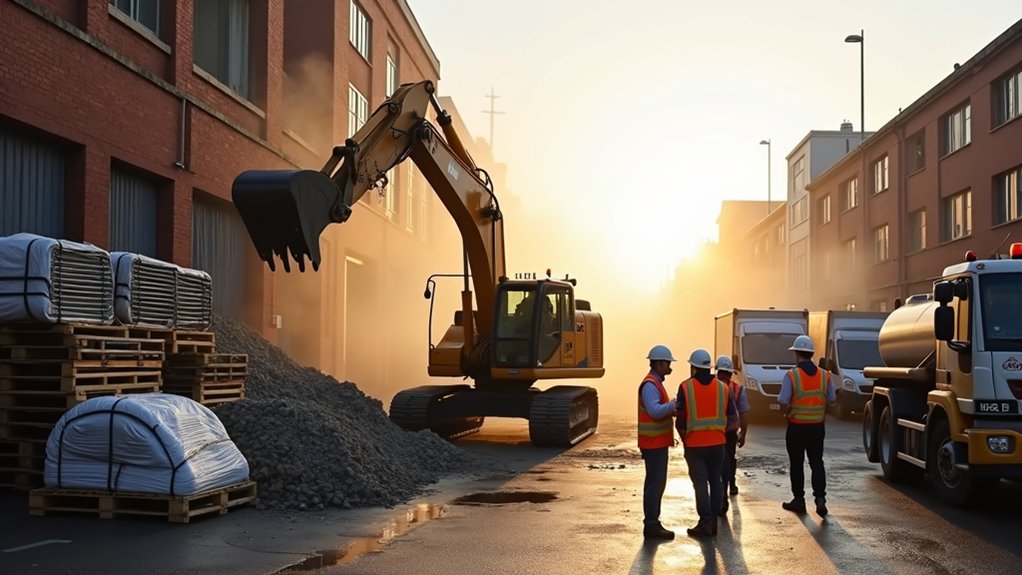
Where does your demolition budget actually go once the excavators roll in? A large share lands with nearby suppliers who keep your programme moving and your costs predictable. You’ll pay local plant hire, haulage firms, scaffold and temporary works providers, fuel distributors, PPE merchants, traffic management teams, surveyors, and tool repair shops.
When you prioritise local procurement, you cut transport lead times, reduce downtime, and secure faster call-outs when something breaks or specs change. You also strengthen supplier partnerships that improve pricing, credit terms, and availability across your next sites.
Ask your contractor for a spend map: which packages are sourced within the region, what’s the response SLA, and where can you consolidate orders. That’s measurable ROI, not goodwill.
How Demolition Recycling Keeps Value Local
Even if you never see it on the invoice, your recycling plan determines whether the project’s value leaves town as disposal cost or stays local as recoverable revenue.
Specify segregation on site, and you’ll turn concrete, brick, metals, timber, and soils into tradable streams that local crushers, scrap yards, and reclamation depots can process and resell.
Prioritise Material reuse by salvaging steels, doors, bricks, and flooring for nearby builders and merchants; you’ll cut haulage, shrink landfill fees, and keep margin in the local supply chain.
Contract for “recycled aggregate back to site” and you’ll reduce imported materials and stabilise programme risk.
You’ll also capture Environmental benefits that clients value, without paying for empty green claims.
Build it into method statements and procurement early.
How to Measure Demolition’s Local Impact (UK Metrics)
If you want to prove demolition delivers local ROI—not just “sustainability”—you need UK-ready metrics that track money, materials, and jobs from gate-to-gate.
Start with local spend: % of contract value paid to UK SMEs within 30 miles, and days-to-payment.
Track labour: local headcount, apprenticeship weeks, and CSCS-qualified hours.
Measure materials: tonnes reused, recycled, and sent to landfill, plus revenue from salvage sold to local processors.
Add logistics: average haul distance and fuel use to show environmental impact in pounds, not platitudes.
Benchmark compliance costs under demolition regulation (notifications, surveys, waste notes) against avoided delays and fines.
Finally, report “time-to-build-ready” and neighbour disruption hours—real indicators developers, councils, and lenders price in.
Frequently Asked Questions
What Insurance Covers Neighbouring Property Damage During Demolition?
You’ll want contractors’ public liability insurance covering neighbouring damage; it handles Property liability. Worried it’s expensive? It’s cheaper than delays. Make certain the demolition contractor also carries contract works cover for Insurance claims and disputes.
Do I Need a Party Wall Agreement Before Demolition Starts?
You’ll likely need one if demolition affects a shared wall, boundary, or excavations near neighbours. Serve a Party wall notice early, lock a Boundary agreement, and avoid costly delays, disputes, and contractor downtime.
How Noisy Can Demolition Be, and What Are the Legal Limits?
Demolition can sound like thunder in a tin canyon. You’ll face high Noise levels, but legal restrictions cap hours and nuisance. You can’t exceed local council limits; monitor, use screens, and avoid costly fines.
What Asbestos Surveys Are Required Before Any Demolition Work?
Before demolition, you’ll need a UKAS-accredited Asbestos Refurbishment and Demolition (ARD) survey; you can’t rely on Asbestos management alone. Meet survey requirements by sampling suspect materials and issuing a report to plan removal and avoid delays.
Who Is Liable if Utilities Are Damaged During Site Clearance?
You’re usually liable if you or your contractor strikes services, so lock down utility liability in contracts. Damage responsibility can shift if you relied on inaccurate maps, but you’ll still face delay costs.