
 By DQCS
Like a smart renovation show reveal, you’ll get the best payoff when you plan the floor first and let the decor follow. Set a clear budget and decide what success looks like—durability, resale value, or comfort. Choose a practical material that fits your traffic and pets, then match its color and texture to what you already own to avoid costly replacements. Next, you’ll reposition furniture and layer rugs and lighting, but there’s one step that prevents expensive mistakes…
Set Your Budget and Goals for New Flooring
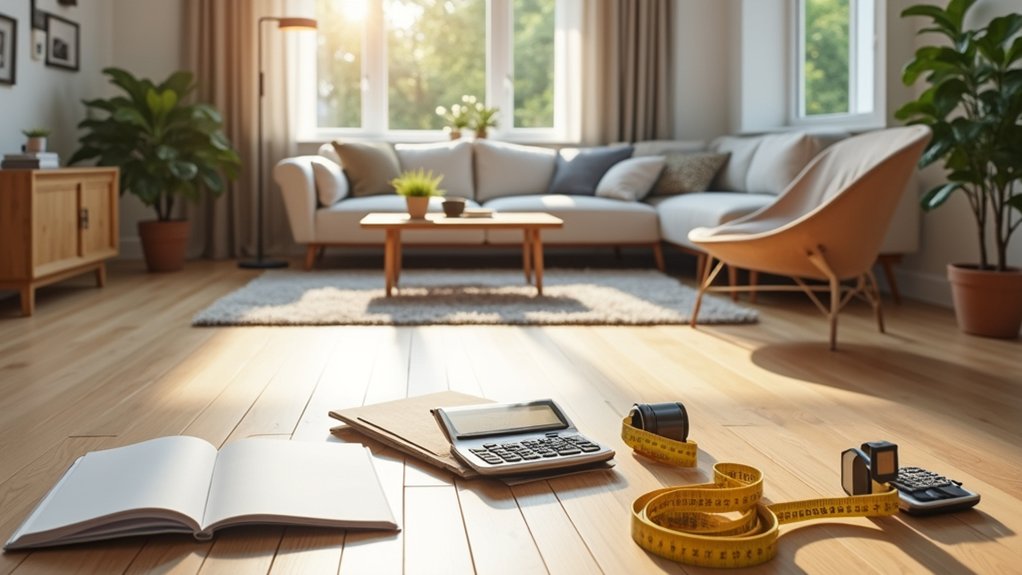
Before you start shopping for planks or tiles, set a clear budget and define what “success” looks like for your living room floor. Decide whether your goal is boosting resale value, cutting maintenance costs, or creating a cleaner look fast. Put a hard cap on total spend, then break it into line items: demolition, subfloor fixes, underlayment, flooring, trim, delivery, and a 10% contingency.
Next, run a quick material comparison using cost per square foot plus estimated install and lifespan. Compare total five- to ten-year cost, not sticker price.
Get at least three quotes and ask for itemized bids so you can spot padding.
Finally, set a timeline and approval rule: you’ll only buy if it meets budget planning and ROI targets.
Choose Living Room Flooring That Fits Your Life
Although trendy finishes look great online, the best living room flooring is the one that matches your daily wear-and-tear and protects your budget long-term. Start by mapping traffic: kids, pets, parties, or quiet evenings.
If spills and scratches are likely, choose durable vinyl plank or laminate with a strong wear layer; you’ll cut refinishing costs and boost resale appeal.
If you want warmth underfoot and sound control in an upstairs room, consider carpet, but price out stain protection and replacement risk.
For a balanced ROI, engineered wood can deliver a wood look without solid-wood maintenance.
Use an area rug to shield high-traffic zones instead of upgrading the whole floor.
Compare underlay options for comfort, moisture protection, and noise reduction before you buy.
Pick Flooring Color and Texture With Your Decor
If you match your flooring’s color and texture to your existing decor, you’ll spend less chasing “fixes” later and get a cleaner resale-ready look now. Start by sampling your largest items: sofa fabric, rug tones, and wall color.
For Color coordination, pick a floor undertone that agrees—warm oak with creams and brass, cool gray-brown with crisp whites and chrome. Keep it simple: one dominant wood tone, one accent tone, and repeat them twice in the room for instant cohesion.
Then use Texture contrast to add value without extra purchases. If your decor is sleek and modern, choose a subtle grain or low-sheen finish; if it’s soft and layered, go with wider planks or a lightly hand-scraped look.
Always test swatches in daylight and lamplight.
Arrange Furniture to Suit Your New Flooring
Once your new floor goes in, the way you place furniture will either showcase that investment or hide it under clutter. Start by floating key pieces to reveal continuous planks or tile lines; you’ll make the room feel bigger without spending more.
Keep clear walkways (about 30–36 inches) so traffic doesn’t grind dirt into high-use zones. If you’ve added Accent walls, aim your main seating toward them to create a focal point and reduce the urge to overcrowd other areas.
Use window treatments to frame light, then position seating to avoid glare and fading on the new surface. Add felt pads and levelers now; they’re cheap insurance against scratches and wobble.
Scale pieces to the room; fewer, better-placed items look higher-end.
Finish the Refresh With Rugs, Lighting, and Accents

Because your new floor already does the heavy lifting, you’ll get the best ROI by finishing with a few high-impact layers: an area rug to define seating and protect traffic lanes, lighting that makes the surface look richer (not washed out), and a tight set of accents that repeat your accent-wall or flooring tones.
For area rug options, size up: front legs on the rug anchors the layout and looks custom. Choose low-pile or indoor/outdoor for durability, and shop remnants, warehouse sales, or washable styles to cut replacement costs. Add a rug pad so it doesn’t slip or grind grit into your finish.
Next, upgrade bulbs before fixtures. Warm LEDs (2700–3000K) reduce glare on glossy floors.
For decorative lighting choices, add one statement floor lamp or plug-in sconce, then finish with two matching pillows and a simple tray.
Frequently Asked Questions
How Long Does Living Room Flooring Installation Usually Take?
You’ll usually finish living room flooring in 1–3 days, but your Flooring material and prep shift the installation timeline. Choose click-lock options to cut labor costs, reduce downtime, and boost ROI quickly.
Do I Need Permits or HOA Approval to Change Living Room Flooring?
You usually don’t need permits for interior flooring changes, but you should check local rules and your HOA before buying. Compare flooring material options, do budget planning, and prioritize durable choices to protect resale ROI.
Can New Flooring Be Installed Over Existing Tile, Hardwood, or Vinyl?
Yes—you can install new flooring over existing tile, hardwood, or vinyl, and it’ll feel like a million bucks. Skip Tile removal if surfaces are flat; choose click-lock Flooring options. Budget ROI improves with prep, underlayment, moisture checks.
How Do I Reduce Dust and Fumes During Flooring Removal and Installation?
You’ll cut dust and fumes by sealing vents/doorways with plastic, running a cheap box fan exhaust, and using a HEPA vacuum. Choose low-VOC adhesives for fume reduction. Dampen debris, wear respirators—smart dust control protects ROI.
What’s the Best Way to Soundproof a Living Room When Replacing Flooring?
You’ll get the best soundproofing by adding a dense underlayment and decoupling layer under your new floor, then sealing gaps. Use Acoustic panels and Soundproof curtains strategically; they’re low-cost upgrades with strong ROI.