
 By DQCS
If you want a driveway that looks premium and still performs in 20+ years, natural stone changes the ROI calculation. You’re not just buying a surface; you’re buying compressive strength, slip resistance, and a service life that often reaches 40–70+ years with sensible upkeep. Up-front costs can be higher than block paving, but replacement cycles and maintenance usually aren’t. The real gains come down to stone choice, laying pattern, and—most often overlooked—drainage…
Natural Stone vs Block Paving: Costs, Lifespan, Upkeep
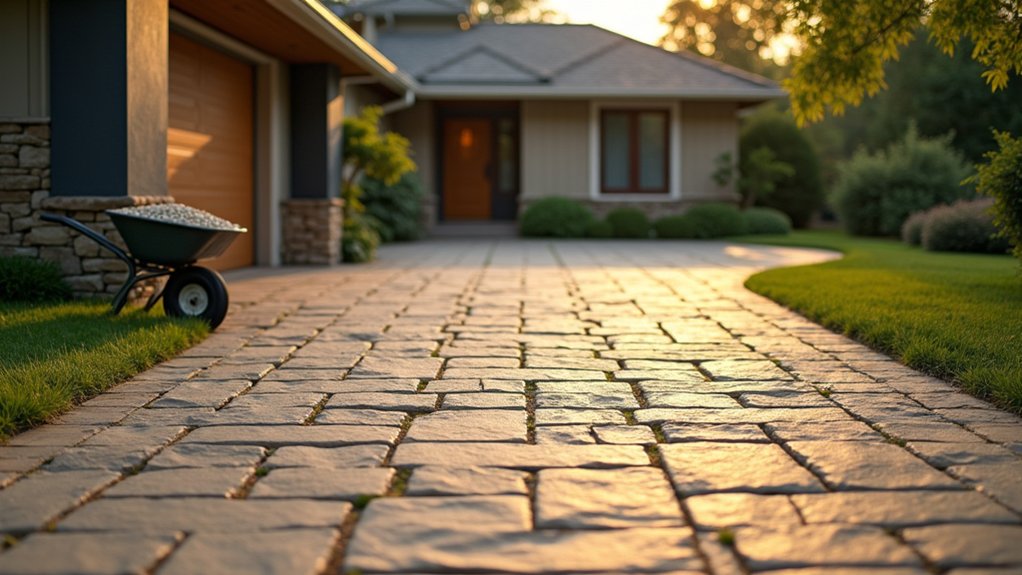
Although both surfaces can deliver a smart-looking driveway, natural stone usually wins on lifespan and long-term ROI, while block paving often wins on upfront cost and speed of installation. You’ll typically pay more per m² for stone, but you’re buying 40–70+ years of service versus roughly 20–30 for many block systems.
Over time, fewer replacements and better kerb-appeal retention can lift resale value and reduce whole-life cost. You’ll manage upkeep differently: stone needs periodic sealing and joint checks, while block paving demands more frequent weed control, re-sanding, and occasional re-levelling from settlement.
For landscape integration, stone’s variation reads more “built-in” than uniform blocks. On environmental impact, longer lifespan and fewer replacements usually mean lower embodied carbon per year.
Best Natural Stone for Driveways: Granite, Sandstone, Limestone
If you’re choosing natural stone for a driveway, focus on whole-life performance—compressive strength, slip resistance, porosity (staining/frost risk), and maintenance—because those factors drive your long-term ROI more than the initial £/m².
Granite typically leads on strength and low porosity, so it resists oil stains and freeze–thaw damage; expect the lowest lifetime maintenance and strong resale appeal, though it costs more upfront.
Sandstone offers broad Stone color choice and good grip, but higher porosity means you’ll likely seal it and clean algae more often.
Limestone can look premium in lighter Stone color tones, yet it’s more acid-sensitive and can etch; choose a dense grade and seal.
Maintenance tips: re-sand joints, rinse regularly, and reseal every 2–4 years.
Natural Stone Driveway Patterns, Borders, and Edging
Once you’ve picked the right stone for strength and porosity, the pattern and edge details decide how well your driveway carries loads, drains water, and holds its shape over time.
Choose a 45° herringbone for the highest interlock under braking and turning; it typically cuts rutting and joint spread versus straight runs. Use running bond or coursed random when you want faster laying and lower waste, but specify tighter joint lines in wheel paths.
Borders are your ROI insurance: a soldier course or double-row kerb restrains creep and reduces future re-leveling. Add contrasting bands to guide parking and upgrade garden aesthetics without extra area.
For edging, pick thick setts or sawn kerbs for crisp lines, better impact tolerance, and long-term weather resistance.
Install a Natural Stone Driveway: Sub-Base, Falls, Drainage
Because water and loads expose every shortcut, you’ll get the best ROI from a natural stone driveway by building the right sub-base depth, setting reliable falls, and planning drainage before the first sett goes down.
Start with sub base preparation: excavate to firm ground, then install 150–250mm of MOT Type 1 (more for clay or heavier vehicles), compacted in 50mm lifts to refusal.
Add a 30–50mm sharp sand or grit bedding layer, then lay stone with tight joints.
Set driveway falls at 1:60 to 1:80 so surface water can’t pond or freeze; verify with a laser, not guesswork.
Direct runoff to linear channels, a soakaway, or permeable joints where permitted.
Edge restraints stop lateral creep and costly relays.
Frequently Asked Questions
Does Natural Stone Driveways Add Value to My Home?
Yes, you’ll likely add value with a natural stone driveway because buyers pay for durability and curb appeal. You’ll run a cost comparison against asphalt, consider environmental impact, and typically see strong ROI over time.
Are There Planning Permissions Required for a Natural Stone Driveway?
You often won’t need permission, but Planning regulations can apply. Check Permission requirements if you change access, add drainage, or cover over 5m² with non‑permeable stone; compliant permeable builds protect resale ROI.
How Does Natural Stone Perform in Freeze-Thaw Climates?
Like armor in a blizzard, natural stone holds up well if you choose low-porosity types and proper base. You’ll reduce Freeze damage and manage Thermal expansion, boosting ROI through fewer repairs, longer lifespan, better resale.
Can Natural Stone Driveways Be Sealed, and How Often?
Yes—you can seal natural stone driveways. You’ll get Sealing benefits like reduced staining and lower water absorption, improving ROI. Plan Maintenance frequency at every 1–3 years, or annually in high-traffic, harsh climates.
What Are the Best Ways to Remove Oil Stains From Stone?
Swift, sure scrubbing starts with Oil stain removal: blot, then apply a poultice (baking soda + acetone), cover 24–48 hours, repeat. For Cleaning natural stone, use pH-neutral cleaner, pressure-rinse low, and reseal to protect ROI.