
 By DQCS
You can modernize your interior doors without blowing your budget if you start by deciding whether you’ll swap slabs or just upgrade what you’ve got. Flat-panel styles, a solid core, and matte-black or brushed nickel hardware tend to return the most visual impact per dollar. If you pair that with simpler trim and a durable satin finish, the whole house looks newer fast—but only if you get the sizing and details right…
Decide If You’ll Replace or Refresh Doors
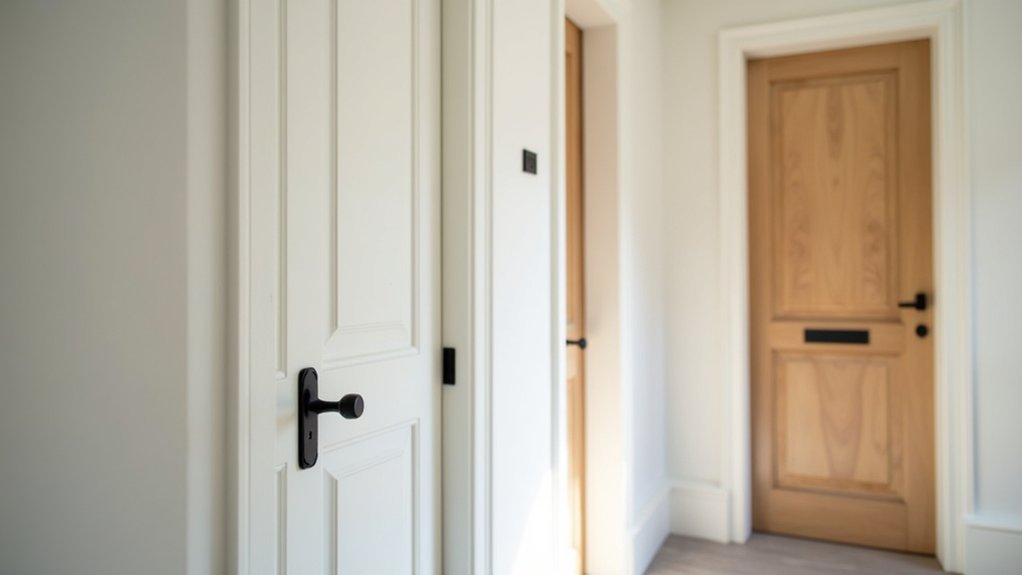
Before you spend on new slabs and hardware, decide whether your doors need a full replacement or just a refresh, because that choice drives your ROI.
Start by auditing each opening: if the door sticks, won’t latch, or has visible gaps, you may have door framing issues that paint and new hinges won’t fix.
If the slab is solid and square, refresh it: tighten screws, swap hinges, add new knobs, patch dents, and repaint or refinish for a low-cost lift.
Replace when you’re dealing with warped cores, hollow-feel damage, delamination, or chronic rubbing after adjustments.
Also weigh comfort: upgrading door insulation on bedrooms, offices, or noisy hallways can justify replacement by cutting sound transfer without big remodel costs.
Pick Interior Door Styles That Look Modern
To maximize ROI on your interior doors upgrade, you’ll want modern styles that look intentional without driving up labor or materials costs. Choose clean panel designs, add sleek glass inserts where they’ll boost light and perceived space, and keep the rest solid to control your budget.
Finish the look by matching modern hardware lines—consistent levers and minimal profiles make even mid-priced doors read high-end.
Choose Clean Panel Designs
Why do clean panel doors look instantly more modern? Because they reduce visual noise, making your rooms feel larger and more current without moving a wall.
For the best ROI, choose simple two-panel or flat-panel profiles over ornate raised panels; they’re widely available, often cheaper, and easier to repaint later. Match the panel layout across hallways and adjacent rooms so the upgrade reads intentional, not piecemeal.
Use your Color palettes strategically: crisp white or soft greige boosts resale appeal, while deep charcoal looks premium in a home office.
Don’t forget lighting effects—smooth doors reflect light evenly and highlight clean lines, which makes inexpensive paint and new hardware look like a higher-end remodel overall.
Consider Sleek Glass Inserts
How do you get a “custom” modern look without paying for custom millwork? Add sleek glass inserts to standard slab or shaker doors. You’ll get instant visual lift, more light flow, and a design cue buyers recognize as updated—without changing framing or trim.
Use Frosted glass where you need privacy (bathrooms, offices, laundry) while still borrowing light. Choose Clear panels for hallways or living areas to open sightlines and make smaller spaces feel bigger.
To keep costs predictable, buy prehung doors with factory-cut lites, or swap in a glass-lite door only on the rooms you see most. Measure openings, match thickness, and confirm safety-rated glass where required.
You’ll spend less than full replacements and boost perceived quality fast.
Match Modern Hardware Lines
Glass inserts modernize the door itself, but mismatched knobs and hinges can still make the whole setup look builder-basic. To keep your upgrade ROI strong, match modern hardware lines: choose straight levers, square rosettes, and slim hinges in one finish.
You’ll spend less than replacing doors, yet the visual payoff reads “custom.” Skip fussy decorative accents and avoid mixing in curvy, ornate pieces pulled from historical styles unless the whole home commits to that look.
Standardize: pick one lever and hinge style for the main level, then repeat it room to room to cut per-unit costs and simplify installation.
Replace builder-grade strike plates, too; they’re cheap and make closures feel solid.
Finally, align backset and latch sizes to avoid extra drilling and labor.
Choose the Right Interior Door Material and Core
When you’re upgrading interior doors, material and core choices decide whether you’re paying for real performance or just a new look. For tight budgets, hollow-core slabs cost least, but they dent easily and transmit noise, so you may replace them sooner.
If you want better ROI, choose solid-core MDF or engineered wood; you’ll get stronger material durability, smoother paint results, and fewer callbacks from sticking or warping. In bedrooms, offices, and media rooms, prioritize core insulation and sound control with solid-core or mineral-filled options.
Save premium solid wood for areas where refinishing value matters, because it costs more and can move with humidity. Also compare stile-and-rail construction to molded skins; sturdier builds hold up longer and feel modern.
Upgrade Interior Door Hardware for a Contemporary Finish
You’ll get a fast, high-ROI refresh by swapping dated knobs for modern lever or matte-black handle sets that match across rooms.
Replace tired hinges and mismatched screws with clean, coordinated finishes so the upgrade looks intentional without adding much cost.
If you want extra resale appeal, add smart lock options on key doors (office, primary suite) where the payoff beats outfitting every interior opening.
Choose Modern Handle Styles
If you want a quick, high-ROI interior door refresh without paying for new slabs, swap in modern handles and matching hardware. You’ll instantly change the vibe for a fraction of replacement costs, and buyers notice the touchpoints they use every day.
Choose clean-lined levers in matte black, satin nickel, or brushed brass to signal “updated” without looking trendy. Skip ornate knobs unless your home leans traditional; if you’ve got Vintage accents or decorative carvings on the doors, pick a simple profile that complements them instead of competing.
Standardize the finish and style across hall, bed, and bath doors for a cohesive, higher-end look. Stick to quality brands with solid feel and consistent backset sizing for easy swaps and fewer returns.
Update Hinges And Screws
Why let shiny brass hinges and mismatched screw heads undermine your new handles? Swapping hinges is a low-cost upgrade that makes doors look intentionally modern. Match finish and shape to your handles—matte black, satin nickel, or brushed brass—and replace all three hinges so lines stay consistent.
Check hinge placement before you buy: standard interior doors typically use 3 1/2-inch hinges, but measure yours to avoid return costs. Reuse mortises when possible, or choose the same leaf size to skip chiseling.
Then focus on screw tightening: drive new, matching screws by hand for the last turns to prevent stripping and keep heads flush. If holes are loose, add toothpicks and wood glue for a firm, durable bite.
Add Smart Lock Options
How do you add a high-end, contemporary feel without paying for a full door replacement? Install smart lock options on key interior doors like your home office, gym, pantry, or rental suite. You’ll modernize the look instantly while boosting digital security and day-to-day convenience.
Choose a keypad lever or smart deadbolt that fits your existing bore holes to avoid carpentry costs. Prioritize models with auto-lock, temporary codes, and activity logs; they deliver the best ROI if you host guests, have teens, or run a short-term rental.
If you don’t need Wi‑Fi, pick Bluetooth to cut price and battery drain. Match finishes to your updated hinges (matte black, satin nickel) for a cohesive upgrade. You’ll spend less than a new door and get a noticeable value bump.
Update Interior Door Trim for Cleaner Lines
Although you can replace an interior door for a big visual change, updating the trim often delivers a cleaner, more modern look for a fraction of the cost. Swap bulky Decorative moldings and Traditional framing for flat stock casing, tight reveals, and simple plinth blocks (or none). You’ll get sharper lines that read “new build” without buying new slabs.
Start by measuring existing casing widths and deciding on a consistent profile throughout the house to boost resale appeal. Use MDF or finger-jointed pine to keep material costs low and finishing fast.
If your jambs sit proud or recessed, add jamb extensions instead of shimming the whole opening. Miter corners cleanly, fill nail holes, and caulk seams for a seamless, high-ROI upgrade buyers notice immediately.
Paint or Stain Interior Doors in Modern Colors
Once you’ve cleaned up your casings and reveals, the fastest way to make every opening look newer is to refresh the door slabs themselves with paint or stain in a modern, consistent palette. Pick a Color palette that matches your walls and hardware, then repeat it on every interior door for a high-end, low-cost payoff.
For paint, choose a durable waterborne enamel in satin or semi-gloss; it hides minor wear and cleans easily. For stain, use a contemporary tone (white oak, walnut, or near-black) and seal with a matte or satin clear coat.
Sand lightly, degloss, and prime where needed so you don’t waste time on peeling touch-ups.
Compare Finish options by traffic: glossier for kid zones, lower sheen for bedrooms.
Get Interior Door Sizing and Install Details Right
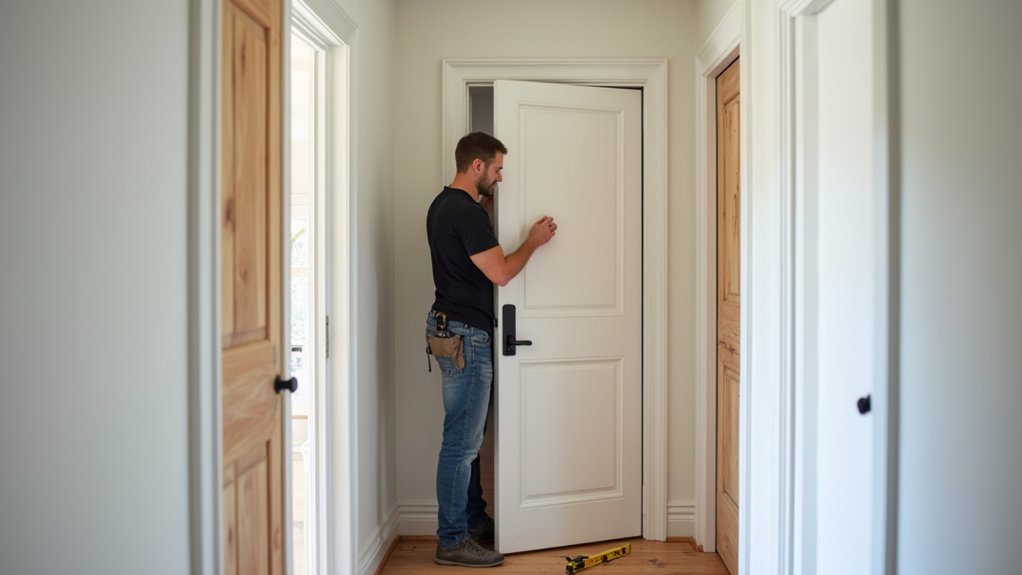
Before you order new slabs or schedule an installer, lock in the right door size, swing, and jamb depth so you don’t burn your budget on returns, reframing, or hacked trim.
Measure the existing door frame opening: width, height, and the jamb depth at several points, since older walls can vary.
Confirm the hinge side and whether you need an inswing or outswing to avoid collisions with closets, switches, and furniture.
Match door thickness to your hardware and latch backset; a thicker slab may require new hinges, longer screws, and a different strike plate.
If your casing is staying, verify reveals and stop placement so you don’t pay for finish carpentry touch-ups.
Spend 10 minutes measuring; you’ll save hours and dollars later.
Frequently Asked Questions
Can I Upgrade Interior Doors in a Rental Without Violating the Lease?
Yes, you can if you use reversible upgrades and get written approval. In one rental, you boosted appeal cheaply with Temporary adhesive films and Decorative door decals, then removed them cleanly at move-out, avoiding fees.
How Do I Reduce Noise Through Interior Doors Without Replacing Them?
Add weatherstripping, a door sweep, and seal gaps to block noise cheaply. Hang thick curtains and use acoustic door panels for quick soundproofing solutions. Add a draft stopper; you’ll boost comfort and ROI fast.
Do Modern Interior Doors Affect a Home’s Resale Value?
Yes, modern interior doors can boost resale value if you control costs and choose durable door material. You’ll see better ROI with upgraded door hardware, consistent styles, and neutral finishes that photograph well.
What Permits or Code Requirements Apply to Interior Door Changes?
Like a roadmap, you’ll usually skip building permits for simple door swaps, but you must follow safety regulations for fire-rated, egress, and accessibility doors. Check local codes early to avoid fines, delays, and ROI hits.
How Can I Match New Doors to Existing Floors and Wall Textures?
Match new doors by sampling floor tones, then use stain color coordination to align undertones. For textures, pick similar sheen and subtle grain. Prioritize door frame matching for trim continuity—it’s cheaper and boosts resale ROI.