
 By DQCS
You buy a tired 4-bed student HMO in Plymouth with seasonal voids and rising repair costs, then you refit it for durability and lower bills. You prioritise insulation, heating, and ventilation because they cut spend every month and reduce complaints. You standardise fixtures, harden finishes, and tighten security so callouts drop and tenancies run longer. You rework the layout to improve flow and prevent disputes. The numbers change fast, but only if you sequence the works correctly…
Plymouth Student House Goals, Budget, and Results

How do you renovate a Plymouth student house without blowing your margins? You start with targets: cut voids, lift rent per room, and reduce maintenance callouts.
Use Rental market trends to set a realistic rent ceiling, then work backward into a capex limit that still delivers a strong yield.
You budget in tiers: must-fix compliance and safety first, then high-impact Student housing amenities that protect pricing power without overspending.
Keep a contingency, track every invoice, and measure spend per room, not just total cost.
Your result should read like a dashboard: refurbishment cost versus projected annual rent, expected payback period, and stress-tested occupancy assumptions.
If the numbers don’t hit, you pause, re-scope, or negotiate harder with contractors.
The Core Upgrades That Made This Plymouth Rental Year-Round
To keep your Plymouth student house lettable year-round, you start with an insulation and heating overhaul that cuts heat loss, reduces winter voids, and stabilises bills tenants care about.
You then choose durable, low-maintenance finishes that withstand high turnover and slash repair callouts between tenancies.
Together, these upgrades protect cash flow by lowering running costs and extending replacement cycles.
Insulation And Heating Overhaul
Although fresh paint and new furniture photograph well, insulation and heating upgrades deliver the numbers that keep a Plymouth student house profitable year-round: fewer voids from winter drop-offs, lower maintenance callouts, and a warmer, more stable indoor temperature that tenants notice immediately.
You start by sealing drafts, topping up loft insulation, and insulating key pipe runs to cut heat loss fast. Then you fit TRVs, balance radiators, and service or replace the boiler so every room hits target temperatures without overheating.
To protect Energy efficiency gains, you add extractor fans with humidity timers and trickle vents—simple ventilation improvements that reduce condensation, mould claims, and redecorating cycles.
You track kWh usage pre/post works, then price rent with confidence and justify longer, non-summer tenancies.
Durable Low-Maintenance Finishes
Once you’ve stabilised heat retention and ventilation, durable low‑maintenance finishes become the upgrade that protects cashflow month after month by cutting repairs, redecoration, and deposit disputes.
Specify hardwearing vinyl plank flooring (AC4+), wipeable matt scrubbable paint, and moisture-resistant bathroom panels to reduce turnover time. In practice, you’ll cut contractor call-outs and repaint cycles from every tenancy to every 2–3 years, improving net yield.
Fit solid-core doors, metal handles, and splashbacks where students cook hard, and you’ll slash breakages that typically trigger £150–£400 per room in deductions and arguments.
Outside, spend once on exterior paint rated 10+ years and keep brickwork sealed. Pair it with simple garden landscaping—gravel, edging, tough planting—to minimise maintenance and boost viewing conversions fast year-round.
What We Stripped Out (and What We Kept)
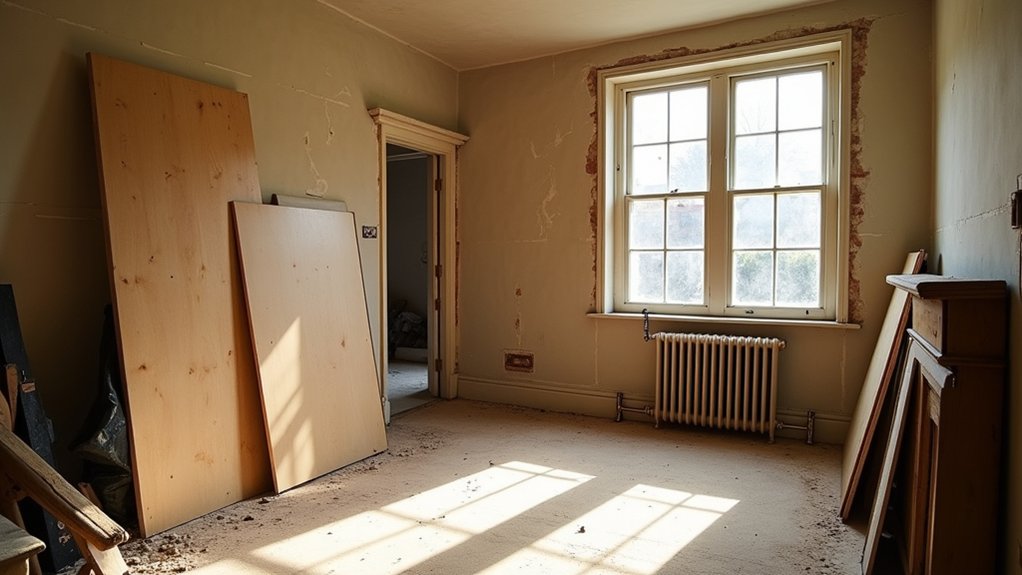
You strip out the non-essentials first—tired built-ins, dated finishes, and redundant partitions—because every skip load and labour hour has to earn back in rent and lower voids.
You keep the structural winners like load-bearing walls, sound joists, and solid staircases, since replacing them blows the budget fast with little tenant-side upside.
You treat each item as a simple ROI call: if it doesn’t improve durability, compliance, or letting appeal, it goes; if it underpins safety and long-term maintenance costs, it stays.
Gutting Non-Essentials
Where do you get the fastest ROI in a Plymouth student house refurb—before you buy new, by stripping out what doesn’t earn its keep. Start with Budget planning: list every item by replacement cost, install time, and impact on rentability.
You’ll strip dated curtains, scuffed laminate, mismatched light fittings, and bulky wardrobes that shrink rooms. You’ll remove broken white goods, redundant shelving, and half-finished DIY that triggers viewing objections.
Keep what’s clean, compliant, and easy to maintain: solid internal doors, serviceable radiators, and any furniture that photographs well and meets safety regs.
Track savings: every skip load avoided funds higher-value upgrades. This discipline supports tenant retention, because you create brighter rooms, clearer layouts, and fewer maintenance calls from day one.
Preserving Structural Features
Stripping back the non-earners clears the view on what actually protects value: the structural features that keep surveys clean, reduce callouts, and stop a refurb from drifting over budget. You strip out swollen chipboard skirting, loose plaster, and ad‑hoc stud walls that hide damp and wiring faults.
You keep anything that’s doing real work: sound joists, straight walls, and roof timbers, then you treat and sister where readings justify it.
You also preserve saleable character only when it’s low-risk. You retain Decorative moldings if they’re intact and don’t block rewires; repairing sections costs less than full replacement and photographs better in listings.
You keep Original staircases when treads are solid; you tighten fixings, add compliant handrails, and avoid a costly rebuild.
Plymouth Student Rental Finishes That Survive Heavy Wear
Although student lets in Plymouth can see higher-than-average turnover, the right finishes cut maintenance callouts, reduce void-time refresh costs, and protect rental yield.
Specify 12–14mm commercial LVT in kitchens and halls: it resists scuffs and lets you replace a single plank, not a whole floor.
Use scrubbable, stain-resistant matt paint (Class 1 wet scrub) so you can spot-clean and re-let faster.
Fit solid-core doors with metal kick plates; they reduce edge damage and locksmith visits.
Choose laminate worktops with ABS edging and stainless splashbacks to curb swelling.
In bathrooms, install large-format porcelain and epoxy grout to limit mould.
Keep decorative accents and aesthetic upgrades modular—swapable lights, framed prints—so you refresh style without redecorating every tenancy cycle.
Heating and Insulation Upgrades That Cut Bills
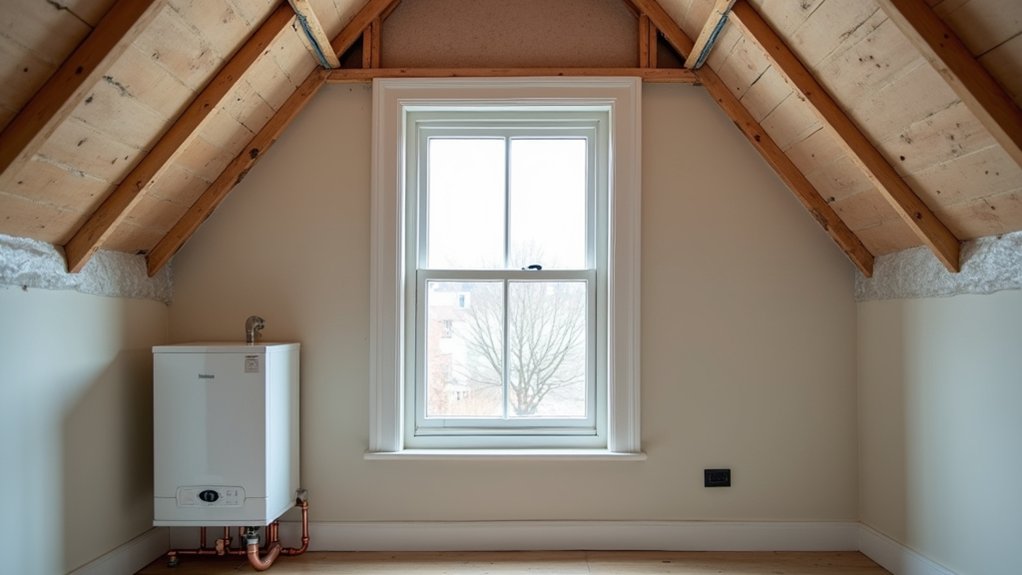
Because heating typically accounts for around half of a UK home’s energy use, the quickest way to cut bills in a Plymouth student house is to stop wasting heat you’ve already paid for—then control what’s left with smarter, zoned heating.
Start with loft insulation to 270mm and draught-proof doors, letterboxes, and floor gaps; these are low-cost and usually pay back within 1–3 winters.
Add TRVs on every radiator and a smart thermostat with room scheduling, so empty bedrooms don’t get heated.
If the boiler’s old, swap to an A-rated condensing combi and balance the system; you’ll often shave 10–20% off gas use.
Use thick curtains and secondary glazing film where replacement windows don’t pencil out.
Keep interior decor light to show warmth, and protect pipes exposed near garden landscaping.
Layout Tweaks That Reduced Voids and Tenant Disputes
When you tighten a Plymouth student house layout, you don’t just improve flow—you cut voids and complaints by removing the pinch points that trigger disagreements (noise, bathroom queues, “shared” space ambiguity).
You replan the ground floor so the kitchen-diner seats everyone, then add a second fridge and clear worktop runs to reduce conflict at peak times.
You convert a box room into a lockable study/utility, so tenants don’t argue over hallway storage.
You swap a seldom-used lounge into an extra ensuite bedroom, lifting rent per sqm and reducing “who owns the TV space” disputes.
You add a WC off the kitchen to ease morning queues.
Outside, garden landscaping creates a defined social zone, while security enhancements (lit entry, gated side access) cut nuisance visits and end-of-tenancy claims.
Plymouth Student HMO Maintenance Systems for Fewer Callouts
If you run your Plymouth student HMO like an asset, you’ll treat maintenance as a system, not a string of reactive fixes. Build a 12-month schedule: boiler service, gutter clears, PAT tests, fire-alarm checks, and silicone refreshes in showers.
Track jobs in a simple spreadsheet and set SLAs: emergencies in 2 hours, urgent in 24, routine in 5 days.
Fit robust kit—lever taps, commercial-grade toilet valves, LED bulkheads—to cut repeat failures.
Add photo checklists at checkout so you charge fairly and spot trends.
Standardise apartment decor (washable paint, wipe-clean splashbacks) to reduce damage time.
Use landscaping design that’s low-maintenance: gravel beds, hardy shrubs, timed lighting.
You’ll cut callouts, protect reviews, and stabilise cashflow.
Frequently Asked Questions
Do I Need Planning Permission to Convert to a Plymouth Student HMO?
Maybe—or maybe not: you’ll often need planning permission if you change use to a Plymouth student HMO, especially for 4–6+ occupants. Check Article 4 areas, prioritise Student safety, and tighten Lease agreement terms for ROI.
What Landlord Licensing Rules Apply in Plymouth for Student Rentals?
You’ll need mandatory HMO licensing for 5+ tenants, plus Plymouth’s additional/selective schemes where designated. Check council maps. Tighten tenant screening and lease agreements; licensing compliance lowers fines, voids, and boosts ROI through steadier occupancy.
How Do I Choose the Best Letting Agent for Plymouth Student Tenants?
Choose a Plymouth letting agent by comparing fees, occupancy rates, arrears levels, and average days-to-let. Demand strong Property management, documented Student safety checks, and transparent reporting. You’ll protect yield, cut voids, and maximise ROI.
What Insurance Covers Accidental Damage and Student Tenant Disputes?
You’ll want landlord insurance with accidental damage cover and legal expenses cover for Tenant disputes. Add rent guarantee if eligible. Track Insurance claims frequency and excess to protect ROI; verify student lets, HMO status, and exclusions.
How Can I Legally Increase Rent Between Academic Years in Plymouth?
Channel your inner town crier: you can raise rent by ending the fixed term, offering renewal at a higher rate, and serving compliant Rent increase notices. Use Lease renewal strategies, benchmark comps, target 5–10% ROI.