
 By DQCS
You don’t need a full remodel to raise your home’s value and make it feel well cared for. You can target high-impact spots—fresh paint on trim and doors, brighter lighting, updated pulls and hinges, tighter caulk lines, and cleaner grout—then measure the payoff in photos, buyer perception, and daily ease of use. The key is choosing projects that look expensive but aren’t, starting with…
Small Renovation Projects That Freshen Paint Fast

Although a full repaint can eat up a weekend and a budget, a few targeted mini-renovations can make your existing paint look cleaner, brighter, and newer in a single afternoon—without hiring a crew.
Start by degreasing high-touch zones (switch plates, door frames, backsplashes) with a mild detergent, then spot-prime stains so they don’t ghost through.
Next, caulk hairline gaps at trim to sharpen edges; crisp lines read “new construction” and lift perceived value.
For scuffs, keep matching paint in a small jar and feather repairs with a mini roller to replicate paint texture, not brush marks.
Finally, use Color psychology: warm whites sell coziness, cool neutrals signal modern, and one refreshed accent wall can reprice a room’s feel for pennies.
Small Renovation Projects That Upgrade Lighting
Upgrade your lighting without a full remodel by installing dimmer switches, so you can control brightness for mood and cut energy use when you don’t need full output.
Add under-cabinet lighting to eliminate countertop shadows and make kitchens feel higher-end with a relatively low material and labor cost.
You’ll improve daily function and boost perceived value fast—two wins that typically pay back better than most cosmetic swaps.
Install Dimmer Switches
Ever wonder why a room still feels “off” even after you’ve swapped in better bulbs? You’re missing adjustability. Installing dimmer switches lets you tune ambient lighting to the task, time of day, and finish materials, so the space looks intentional instead of harsh or flat. That translates to mood control without new fixtures—high ROI for a low-cost upgrade.
Choose a dimmer rated for your bulb type (LED-compatible matters) and the circuit load. Replace one switch at a time, shut off the breaker, and match wires to the existing connections.
If you’ve got a multi-way setup, buy a 3-way dimmer, not a standard model. You’ll cut energy use, extend bulb life, and make showings and gatherings feel higher-end.
Add Under-Cabinet Lighting
When your counters sit in their own shadow, even a bright ceiling fixture won’t make prep work feel clean or premium. Add Under cabinet lighting and you’ll boost task illumination exactly where you chop, read recipes, and spot spills.
It’s a small spend that photographs well, signals “updated kitchen,” and can lift perceived value during showings.
Choose LED strips or puck lights with 3000K–3500K color for a warm-neutral look, 90+ CRI for accurate food color, and a dimmable driver so you can shift from work mode to ambiance.
Hardwire for the cleanest install, or use plug-in kits if you need speed and a lower bill.
Mount lights near the cabinet front to avoid glare and shadow lines.
Small Renovation Projects With New Hardware

How quickly can a space feel updated without tearing into walls? Swap in new cabinet handles, pulls, and hinges and you’ll see an instant facelift that buyers notice. Treat hardware accents like jewelry: consistent finish, clean lines, and the right scale for each door or drawer. Measure existing hole spacing first, then choose replacements that match to avoid patching and repainting.
In kitchens and baths, prioritize touchpoints: knobs, pulls, towel bars, and faucet handles. Stick to two finishes max (for example, matte black with brushed nickel) to look intentional. Upgrade to soft-close hinges where possible to reduce wear and make daily use feel premium.
You’ll spend little, install fast with a screwdriver, and raise perceived quality—often a strong ROI for a weekend.
Small Renovation Projects That Boost Storage
Although you mightn’t add a single square foot, you can make a home feel bigger—and sell better—by upgrading storage where clutter collects. Start with a closet redesign: add double-hang rods, a top shelf, and a 12–16″ deep shoe tower to reclaim dead space. Use adjustable systems so buyers see flexibility, not a custom headache.
Next, tighten storage organization in kitchens and baths: install pull-out trays in base cabinets, vertical dividers for sheets and pans, and a narrow roll-out beside the fridge.
Add a mudroom-style drop zone with hooks, cubbies, and a bench lid for hidden bins. Choose durable white melamine or sealed plywood for a clean, low-maintenance look. You’ll reduce daily mess, photograph better, and justify a higher asking price with modest labor and materials.
Small Renovation Projects That Update Flooring
Because flooring reads as “condition” the moment someone walks in, a small, targeted update can deliver one of the cleanest ROI wins you’ll make without moving walls.
Start by fixing squeaks, replacing broken tiles, and leveling transitions; those details signal care. If full replacement isn’t in budget, refinish hardwood or apply a high-durability microtopping to tired concrete for a modern, seamless look.
Choose mid-market flooring materials with strong wear layers (LVP, engineered wood) and neutral tones that photograph well.
Pay attention to flooring textures: matte finishes hide scratches, while subtle grain adds warmth without dating the space.
Upgrade baseboards and add clean threshold strips to complete the install. You’ll reduce objections and speed offers at resale.
Small Renovation Projects That Refresh Kitchens
Even if you don’t change the kitchen’s footprint, a few targeted upgrades can lift perceived value fast and help your listing photos stand out. Start with hardware: swap dated pulls for matte black or brushed nickel and match the faucet finish for a cohesive look.
If boxes are solid, paint or reface doors; a light neutral sells and costs less than replacement. Consider custom cabinet design only where it pays—add a pull-out trash base, tray dividers, or soft-close hinges to boost function buyers notice.
Update lighting with bright, high-CRI LEDs and under-cabinet strips to remove shadows. For quick impact, choose backsplash alternatives like peel-and-stick tile, beadboard, or a single slab panel; they read clean on camera and install fast.
Small Renovation Projects That Modernize Bathrooms
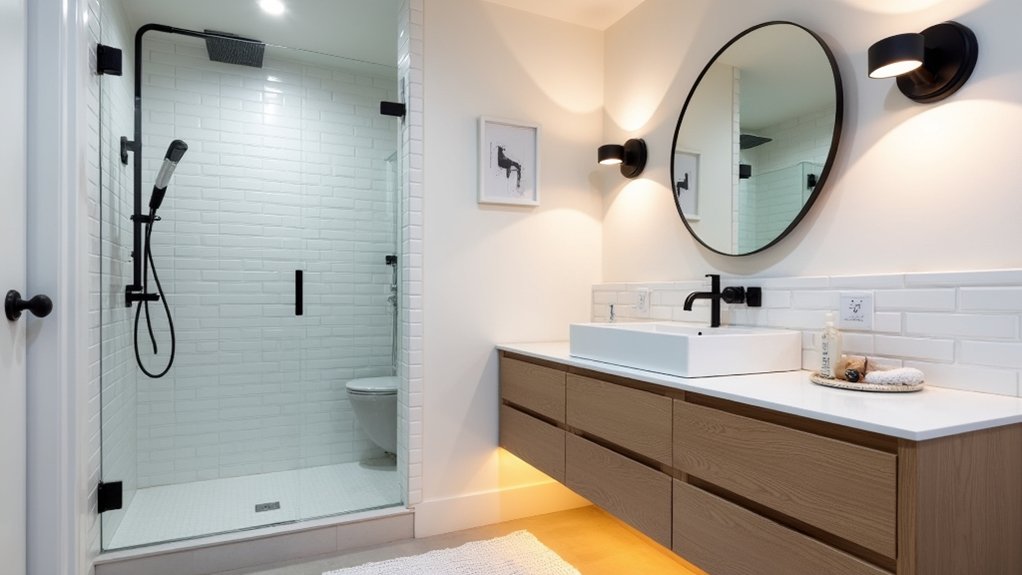
To modernize your bathroom without a full remodel, you can focus on high-impact updates that buyers notice and appraisers can justify. You’ll boost perceived value fast by swapping out dated fixtures and upgrading lighting and mirrors for cleaner lines and better functionality.
Then you can refresh tile and grout to make the space look newer, brighter, and easier to maintain.
Swap Out Bathroom Fixtures
When your bathroom feels dated, swapping out fixtures delivers one of the fastest, highest-ROI upgrades you can make without tearing out tile. Start with the faucet, showerhead, and tub spout: matching finishes instantly makes the room look intentional, and buyers notice cohesive hardware.
Choose Water saving options like a 1.28 GPF toilet, a 1.5 GPM bathroom faucet aerator, and a 1.75 GPM showerhead to cut monthly utility costs without sacrificing pressure.
If you’re replacing Vintage fixtures, keep the charm but modernize performance with updated valves, cartridges, and supply lines to prevent leaks.
Measure rough-ins, valve depth, and escutcheon coverage before you buy so you won’t patch walls.
Finish by re-caulking and sealing penetrations for a clean, durable install.
Upgrade Lighting And Mirrors
After you’ve updated the fixtures, lighting and mirrors, deliver the next big visual payoff with minimal mess. Replace dated vanity lights with LED fixtures rated for damp locations, and choose 2700–3000K for flattering color. Add a dimmer so you can shift from task brightness to ambient ambiance, boosting comfort without raising energy costs.
If you’ve got shadows, install vertical sconces at eye level for even illumination.
Swap a builder-grade mirror for a larger framed piece or a backlit model to amplify light and make the room feel bigger. Pick finishes that match your new hardware for elegant aesthetics.
Prioritize anti-fog features and quality drivers; they cut callbacks and extend lifespan. Measure first, locate studs, and cap wires safely.
Refresh Tile And Grout
Although full tile replacement blows up budgets fast, rejuvenating your existing tile and grout delivers a high-ROI facelift with minimal downtime.
Start with Tile cleaning: use an alkaline cleaner for soap scum, then a mild acid only if the tile type allows it. Scrub grout lines with a stiff nylon brush, rinse well, and dry completely so you don’t trap moisture.
If grout’s crumbling or stained through, re-grout small sections or apply a colorant for uniform tone.
Finish with Grout sealing to cut future staining, reduce mildew, and extend cleaning cycles—an easy value add buyers notice.
Replace cracked caulk at corners and around the tub to stop water intrusion.
You’ll spend little, yet your bathroom reads newer fast.
Frequently Asked Questions
Do I Need Permits for Small Renovation Projects in My Area?
You probably do, but it depends on your city and scope. Check Permit exemptions and zoning restrictions, then call your building department. Pull permits for structural, electrical, plumbing work to avoid fines, delays, and resale issues.
How Can I Estimate Total Costs Including Labor and Hidden Expenses?
Estimate total costs by getting itemized bids, building cost breakdowns, and doing budget planning with a 10–20% contingency. Include labor, permits, disposal, delivery, taxes, change orders, and downtime to protect ROI.
What Is the Typical Timeline for Completing Multiple Small Upgrades?
You can finish multiple small upgrades in 1–4 weeks—blink and the calendar explodes. You’ll speed ROI with tight Budget planning, smart Material selection, phased scheduling, and buffer days for permits, deliveries, and surprise fixes.
Which Projects Add the Most Resale Value in My Local Market?
You’ll add the most local resale value by updating kitchens and baths, boosting curb appeal, and improving energy efficiency. Prioritize Luxury upgrades buyers notice and Eco friendly improvements they can quantify through lower bills and inspections.
How Do I Choose Reliable Contractors or Decide What to DIY?
You choose reliable contractors by checking licenses, insurance, references; you DIY only within skills. Like a tight ledger versus a loose hammer, use Budget planning, demand itemized bids, and follow Safety precautions for higher ROI.