
 By DQCS
Like the “house built on sand” cautionary tale, your driveway and hard landscaping only perform as well as the stone beneath them. Quarrying controls aggregate strength, angularity, and cleanliness, which directly affects compaction, drainage, and how soon you’ll pay for repairs. If you want a surface that locks together, stays level, and looks clean after rain, you need to know what happened before the truck arrived—starting with how the rock was blasted and crushed…
How Quarrying Affects Driveway Aggregate Quality
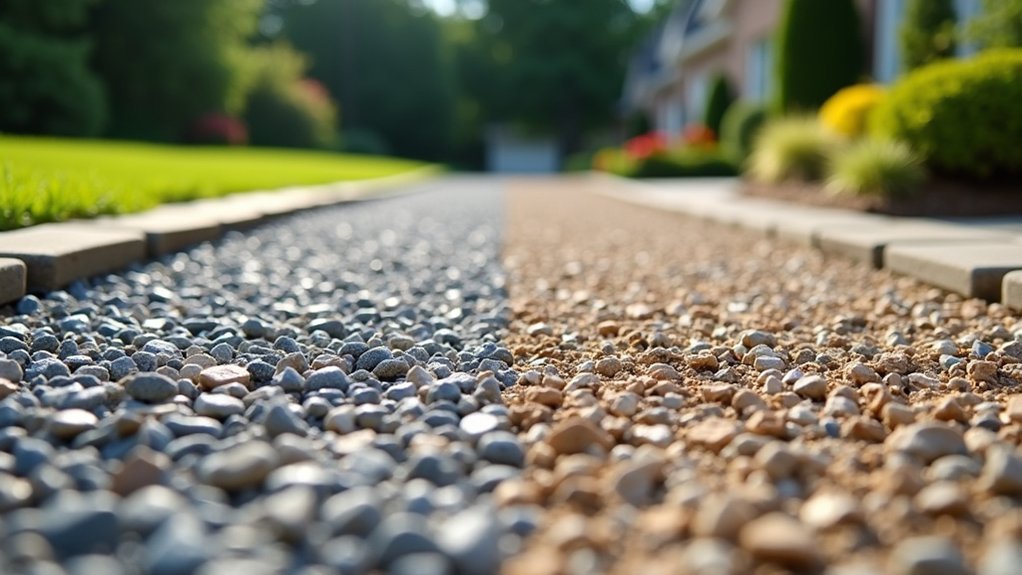
Although gravel might look the same on the surface, the way a quarry blasts, crushes, and screens its rock determines how your driveway performs—and what it costs you over time. You’ll get better ROI when you choose aggregate from a quarry with consistent geology, strict gradation testing, and clean stockpile management, because it compacts predictably and drains without pumping fines to the top.
Ask for recent sieve analyses, moisture limits, and contamination controls; small variations can mean more topping-up, rut repair, and regrading visits. Also factor quarrying environmental impacts and community noise concerns into supplier selection: operations that manage dust, runoff, and haul routes tend to run more reliably, reducing delivery delays and surprise price spikes that inflate your installed cost.
From Blasting to Crushing: Stone Strength and Shape
When a quarry changes its blast pattern or crusher settings, it changes the strength and shape of the stone you’re paying to put on your driveway. Better blasting techniques create consistent fragmentation, so crushers work efficiently and produce fewer weak, micro‑fractured pieces that break down under traffic. That means less rutting, less dust, and fewer top-ups—real savings over time.
Ask your supplier what rock type comes from their quarry location and whether they run primary jaw, cone, or impact crushing for your product.
Jaw and cone setups often yield stronger, more cubical stone, while aggressive impact crushing can increase fines and flaky particles.
If your driveway sees heavy vehicles, specify harder, angular aggregate and reject loads with excessive flat pieces. You’ll get a tighter surface and longer service life.
Screening and Grading for a Stable Driveway Base
Why does one load of “¾-inch minus” lock together and last, while another turns to dust and ruts after a few rainstorms? The difference is screening and grading: you need a tight, predictable blend of particle sizes so the small pieces fill voids and the larger pieces carry load. Ask your supplier for a gradation spec or sieve report, not just a name.
For ROI, match the base to traffic: use well-graded 1″ minus (or ¾” minus) for the base, then cap with a consistent top layer. Reject loads with oversized stone or too-uniform chips that won’t knit.
During placement, keep thickness uniform and crown the driveway to shed water. For Landscape integration, feather edges into paths and beds.
Environmental considerations start here: proper grading reduces washouts and rework.
Washing and Fines Control to Prevent Dust and Staining
How clean is the rock you’re paying to spread? If your aggregate carries excess fines, you’ll buy problems: airborne grit, muddy tracking, and a surface that seals up and sheds water. Ask whether the quarry washes the product and how they manage slurry and stockpiles so fines don’t creep back in.
For dust prevention, insist on a low-fines spec and request a recent sieve analysis; you’re paying for stone, not powder.
For staining control, confirm they’ve removed clay, silt, and iron-rich particles that can bleed onto pavers, concrete edges, and garage floors after rain.
On delivery, reject loads with visible haze, clumps, or cloudy rinse water. Cleaner rock compacts better and cuts maintenance, saving time and resealing costs over years.
Matching Quarry Materials to Your Landscaping Job
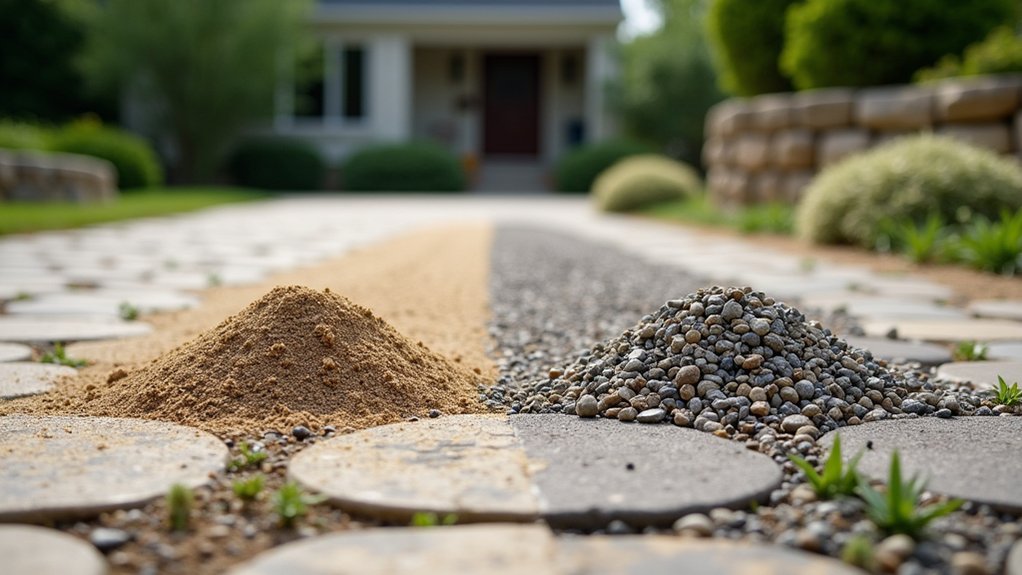
Even if you’re buying from the same quarry, you’ll get better ROI by matching the material to the job instead of defaulting to “driveway gravel.” For a base, choose a well-graded, angular crushed stone that locks together and hits compaction targets.
For the top layer, pick a size that sheds water, stays under tires, and doesn’t migrate into lawns. For drainage, use clean, uniformly sized stone that won’t choke with fines.
Ask for gradation reports and confirm the source blend, because consistent spec reduces rework, potholes, and edging repairs. If you’re building patios or paths, select screened aggregates that fit joint width and expected foot traffic.
Compare delivered cost per ton against expected service life, not sticker price. You’ll also cut quarrying environmental impact by ordering only what’s needed and choosing suppliers using sustainable quarrying practices.
Frequently Asked Questions
What Driveway Aggregates Are Best for Freeze-Thaw Climates and Heavy Rainfall?
You’ll get best results with angular crushed granite, basalt, or limestone base topped with washed 3/4-inch stone; they drain fast and interlock. Prioritize Aggregate selection for Concrete durability, reducing heave, rutting, and costly repairs.
How Can I Estimate How Much Aggregate My Driveway Project Requires?
One cubic yard covers about 108 square feet at 3 inches—picture a 12×9 slab. For aggregate calculation, measure length×width×depth, convert to cubic yards, then add 10% for waste; that material estimation protects ROI.
Do Driveway Stones Need Sealing, and How Often Should It Be Reapplied?
You don’t always need sealing, but it boosts ROI by reducing washout and weeds; reapply every 1–3 years depending on traffic and sealant longevity. Use proper sealing techniques: clean, dry stone, even coverage, avoid rain.
What Permits or Regulations Apply When Sourcing Quarry Materials Locally?
You can’t cut corners: check Local permit requirements for extraction, hauling, and stockpiling, plus Environmental regulations on dust, water runoff, noise, and habitat. Verify the quarry’s licenses and chain-of-custody to avoid fines and delays.
How Do Quarrying Practices Impact the Carbon Footprint of Landscaping Materials?
Quarrying practices raise your carbon footprint through blasting, diesel hauling, and processing energy, but you can cut impacts by choosing regulated sites. Prioritize Environmental regulations compliance, efficient transport, and Carbon emission reduction plans to protect ROI.