
 By DQCS
When you clear a site in a UK city, you’re not just removing a building—you’re resetting the economics, the risk profile, and the planning options. Demolition makes sense when retrofit can’t meet safety, access, or energy targets, or when contamination and layout lock in long-term cost. But you’ll face permits, surveys, utilities isolation, and tight controls on dust, noise, and waste. The real question is what you open up next—and what it costs to keep neighbours onside…
When Does Demolition Make Sense in UK Cities?
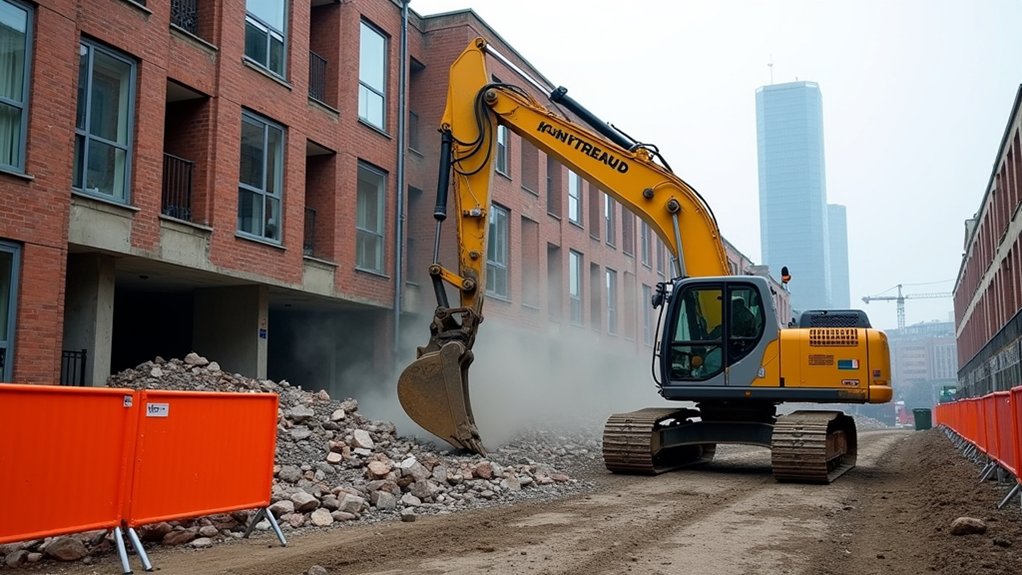
Although demolition can feel like the nuclear option, it makes sense in UK cities when the numbers show you’ll release more value by starting again than by patching up what’s already there. You choose it when surveys confirm structural failure, chronic water ingress, or obsolete floorplates that block compliant egress, servicing, or accessibility.
You also act when voids, capex, and downtime mean refurbishment won’t hit target yields, while a new scheme can lift net lettable area, EPC performance, and rental tone.
For Urban renewal, you time works to align with funding windows, planning policy, and transport upgrades. You protect community impact by phasing decants, keeping routes open, controlling noise, and committing to local jobs, meanwhile reducing programme risk with early enabling works.
Demolition vs Retrofit in the UK: Carbon, Cost, Heritage
When you weigh demolition against retrofit in the UK, you’re really balancing embodied carbon and heritage value against capex, programme certainty, and future income.
Retrofit typically wins on carbon: you keep the structural frame, cut upfront emissions, and may unlock greener finance or tenant demand for low‑carbon space. But you’ll price in surveys, constraints, and operational disruption that can erode ROI.
Demolition can outperform when the existing layout blocks modern floorplates, servicing, or accessibility, or when you need higher density for Urban renewal.
New build gives cleaner warranties, faster leasing in prime specs, and clearer cost control—if your land value supports it.
With Adaptive reuse, you trade some efficiency for character, planning goodwill, and premium rents, especially in heritage-led locations.
How Does Demolition Work in the UK? Permits, Surveys, Safety
Before you book the machines, you’ll need to lock down UK demolition compliance—because permits, surveys, and safety controls drive your programme certainty and cost risk as much as the strip‑out itself.
Start with Permitting processes: confirm whether you need planning permission, a prior approval, or just a Section 80 notice under the Building Act, then align Building Control, highways/licences for skips and hoarding, and utility disconnections.
Commission R&D surveys early: asbestos (UKAS), structural, services, and ecology, so you can price the methodology, waste streams, and lead times without surprises.
Build Safety protocols into the tender pack: CDM roles, RAMS, temporary works design, exclusion zones, dust/noise/vibration controls, and air monitoring. You’ll cut delays, variations, and enforcement risk.
What Does Demolition Enable: and How Do You Limit Disruption?
Demolition doesn’t just remove a building—it reveals the programme and value that sit behind it, from safer strip‑out and remediation to faster site mobilisation for new homes, offices, or infrastructure. You unlock urban renewal by clearing constraints: contaminated ground, obsolete layouts, and hidden structural risk. You also create measurable ROI through earlier starts, cleaner plots, and lower redesign contingency.
To limit disruption, you sequence work: soft‑strip first, then controlled demolition, then load‑out in off‑peak windows. You set noise and dust KPIs, use enclosed chutes, mist cannons, and real‑time monitors, and keep neighbours informed with weekly look‑aheads.
You reduce environmental impact by segregating waste streams, maximising concrete crushing and steel recovery, and planning vehicle routes to cut idling. You protect access with traffic marshals and timed deliveries.
Frequently Asked Questions
What Happens to Residents and Businesses Displaced by Demolition Projects?
You’ll relocate through buyouts, new leases, or temporary moves, and you’ll use Relocation assistance to cut downtime. Test the “no net harm” theory: community impact still hits footfall, networks, and revenue.
How Are Demolition Contractors Selected and Vetted in UK Procurement?
You select UK demolition contractors through procurement procedures: pre-qualification questionnaires, financial and insurance checks, and HSE records. You score bids on contractor qualifications, method statements, price, and programme, then audit references and compliance.
Can Demolition Uncover Contaminated Land, and Who Pays for Remediation?
Yes—demolition can unearth contamination like turning over a risky deck. You’ll fund Environmental assessment first; then liability follows leases, contracts, and polluter-pays rules. If unclear, you’ll negotiate cost-sharing to protect ROI via land rehabilitation.
What Insurance Is Required for Demolition Work and Adjacent Property Risks?
You’ll need Insurance requirements: contractors’ all risks, public and employers’ liability, demolition-specific cover, and professional indemnity if designing. To manage adjacent property risk, add non-negligent liability, party wall, and high limits.
How Do Demolition Timelines Affect Local Housing Supply and Rental Prices?
When timelines stretch, you squeeze supply, so rents rise; when you phase smartly, you stabilize prices. In Urban renewal, you’ll shorten vacancies; Heritage preservation may slow starts, but you’ll protect ROI, reduce objections.