
 By DQCS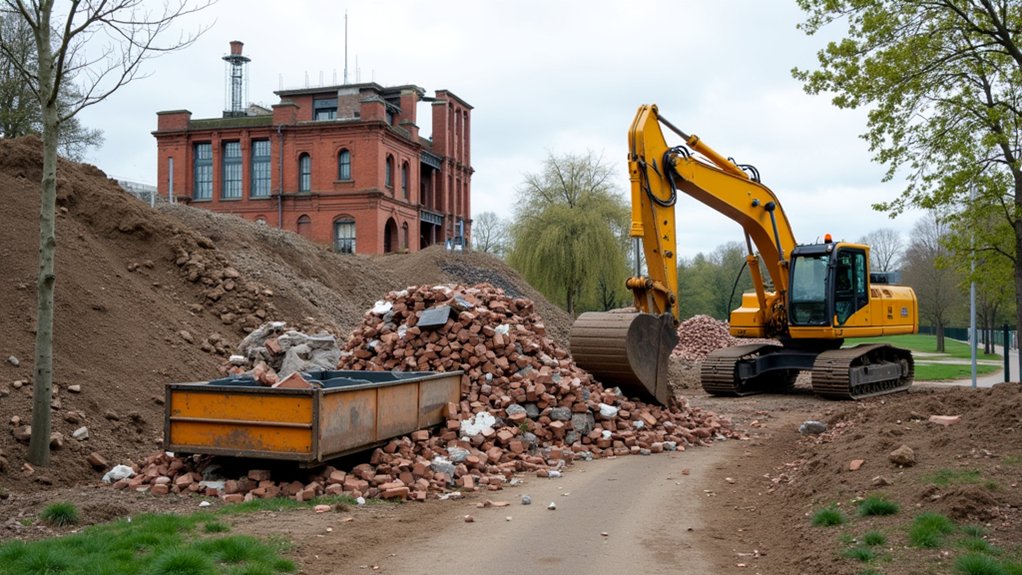
If you’re planning redevelopment in the UK, sustainable demolition lets you turn a liability into measurable ROI. You’ll strip out assets, separate materials, and stay compliant while cutting landfill and haulage costs. You can reuse brick, timber, and metal on-site to create paths, seating, and habitats that boost value and planning appeal. The real question is how you set the scope, methods, and recovery targets so the numbers work…
What Is UK Sustainable Demolition?

Although demolition often gets framed as “just tearing buildings down,” UK sustainable demolition is a planned, compliance-led process that maximises asset recovery, cuts waste-to-landfill, and reduces carbon while keeping your programme and budget on track.
You start with audits that identify salvage value in steel, brick, MEP kit, and fixtures, then you sequence soft strip and structural take-down to preserve materials for resale or re-use.
You track outputs by weight, target high diversion rates, and choose low-emission plant and logistics to shrink embodied and operational carbon.
Demolition innovation—like on-site crushing, smart segregation, and material passports—turns waste into certified aggregates and traceable products.
You also plan the end state early, so soils, drainage, and retained trees support Urban biodiversity and faster redevelopment.
What UK Regulations Govern Sustainable Demolition?
Where do you start if you want sustainable demolition that won’t get stalled by enforcement, claims, or unexpected disposal costs? Start with the UK’s core compliance stack: CDM Regulations 2015 for client duties, competent contractors, and safe sequencing.
The Environmental Protection Act 1990 and Environmental policies set by the Environment Agency are also essential for duty of care, consignment notes, and approved carriers.
And don’t forget the Waste (England and Wales) Regulations 2011 for Waste management, including the waste hierarchy and proper classification.
If you’re handling hazardous materials, you must follow the Hazardous Waste Regulations and guarantee correct storage and removal.
Check planning conditions, permitted development limits, and local authority requirements.
Get it wrong and you’ll pay through delays, fines, and higher gate fees fast.
How to Plan a UK Demolition for Material Reuse
Compliance keeps your demolition moving; smart planning is what turns the strip-out into resale value and lower waste bills. Start with a pre-demolition audit and label assets by resale grade: metals, bricks, timber, MEP kit, glazing.
Get your contractor to quote disposal versus reuse so you can see margin, not just cost. Build a sequence plan that protects high-value items, then schedule specialist removals before structural works.
Lock in buyers early—reclamation yards, online marketplaces, local contractors—and confirm spec, quantities, and collection dates.
Set up on-site segregation zones and document weights, photos, and chain of custody to defend rebates. Use Recycling techniques for low-grade streams, and prioritise Material salvage where labour yields the biggest return.
Track KPIs weekly, invoice fast.
Which UK Demolition Methods Cut Carbon Most?
If you want the biggest carbon cut from a UK demolition, choose methods that reduce plant hours, avoid double-handling, and keep materials in high-value loops. Start with soft-strip and sequenced deconstruction where feasible: you’ll cut waste movements, shrink skips, and improve programme certainty.
Use high-reach with modern shear/pulveriser attachments to process at source, minimising haulage and idling. Specify on-site crushing and screening for concrete and masonry so you reduce HGV trips and buy less virgin aggregate.
Add dust-suppressed electric or hybrid plant when grid access makes sense; it delivers measurable Carbon reduction and helps you win low-carbon tenders.
For tight urban plots, consider remote-operated mini plant and floor-by-floor top-down removal—Innovative techniques that protect neighbours and keep productivity high.
How Reclaimed Demolition Materials Enable Green Spaces
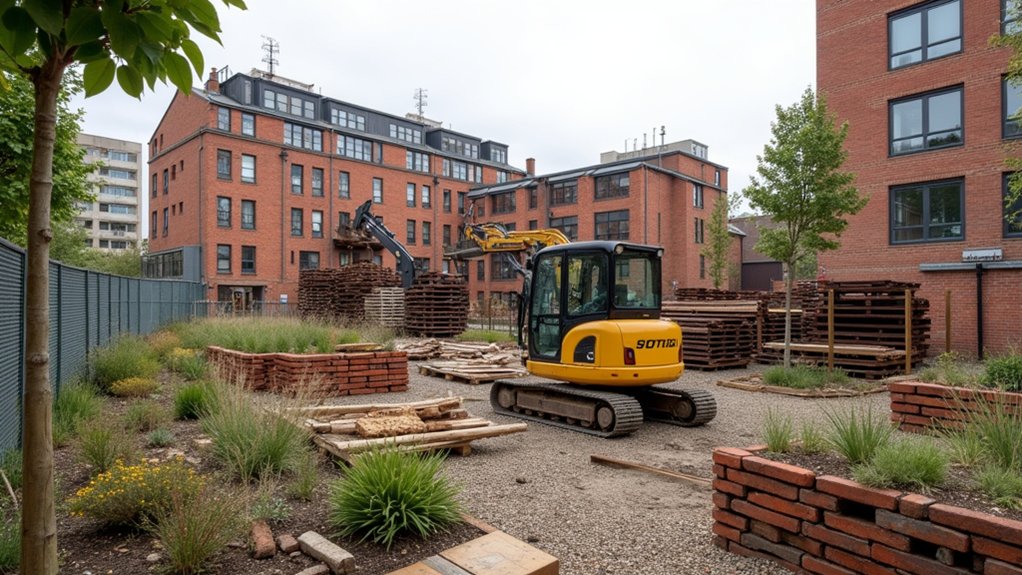
Lower-carbon demolition doesn’t stop at fewer plant hours—it pays off again when you channel reclaimed materials into parks, pocket gardens, and green roofs instead of sending value to landfill.
Crush clean concrete into sub-base for paths, seating plinths, and rain-garden edging; you’ll cut virgin aggregate spend and disposal fees fast.
Reuse bricks and stone for permeable paving and retaining walls that specifiers love and planners approve.
Salvage timber for raised beds, boardwalks, and shade structures, then document provenance to strengthen BREEAM and ESG reporting.
You also boost urban biodiversity by building habitats: gabion walls with broken masonry, log piles, and varied planting zones.
Pair this with eco-friendly landscaping to win tenders, reduce maintenance, and lift public value.
Frequently Asked Questions
How Much Does Sustainable Demolition Cost Compared With Conventional Demolition in the UK?
You’ll usually pay 5–20% more than conventional demolition in the UK; this Cost comparison often flips when you sell salvaged materials, cut landfill fees, and win greener tenders. Environmental benefits also reduce compliance risk and delays.
How Long Does a Sustainable Demolition Project Typically Take From Start to Finish?
You’ll typically finish a sustainable demolition in 2–8 weeks, depending on size, surveys, and permits. You add time for Recycling processes, but you cut Environmental impact, maximise salvage revenue, and reduce disposal fees.
Do I Need Planning Permission for Demolition on My UK Property?
You often do need planning permission, especially in conservation areas, for listed buildings, or for larger demolitions. Check Building permits, schedule Environmental assessments, and confirm with your local council early—you’ll avoid delays, fines, and costly redesigns.
How Do Neighbours’ Noise, Dust, and Traffic Impacts Get Managed During Demolition?
You manage impacts with a plan: not chaos, but control. You schedule loud works, use noise mitigation barriers, enforce dust control via misting and sheeting, and coordinate traffic marshals—cutting complaints, delays, and costs.
Can Reclaimed Materials Be Certified for Safety and Insurance Compliance in UK Projects?
Yes—you can certify reclaimed materials for UK safety and insurance. You’ll secure Material certification through UKAS-accredited testing, traceability, and grading to Safety standards, then document results for insurers to cut risk, delays, and costs.